The Cold File UAP
UAP
Unidentified aerial and anomalous phenomena, taken on the documentary record rather than on the eyewitness alone. The cases on this shelf rest on instrumental evidence first: radar tracks, gun-camera film, calibrated photometry, satellite telemetry. The named institutional findings come next: the Air Force's Blue Book files, the French GEPAN reports, the Condon record, the Brazilian Navy's Trindade plates. Cultural framing comes last, and is labeled as such. The aim is not to argue the question; it is to set out what the instruments and the investigators actually wrote down, and to be honest about what they did not settle.
17 cases on file. 10 unexplained, 7 disputed.
Case files
-
The Walnut over Fort Yukon: The JAL 1628 UAP Encounter Over Alaska, 17 November 1986
A Boeing 747 freighter crew tracked a walnut-shaped object for thirty-two minutes over Alaska, returns appeared briefly on three radar systems, the FAA released the data and said it was unable to confirm a second aircraft, and in 2001 the FAA division chief who ran the inquiry described a Round Room briefing he says the CIA told him never happened.
The open question What did Captain Kenju Terauchi and the JAL 1628 crew see for thirty-two minutes over Alaska on 17 November 1986, simultaneously appearing as intermittent primary radar returns on FAA Anchorage ARTCC, USAF Elmendorf ROCC, and Anchorage Tower screens, and what really happened in the FAA Round Room briefing John Callahan described in 2001?
-
The Trans-en-Provence Trace: A French Space Agency's Most Documented UAP Case
On the late afternoon of 8 January 1981, a man working at the bottom of his terraced garden in a small Provençal village watched an oval, lead-colored object descend, sit briefly on the ground, and depart in silence. The French national space agency's UAP unit ran the most thoroughly documented single investigation in its files and concluded it could not explain the result through any single conventional mechanism. Forty-five years on, the institutional classification has not been amended, and the published critical literature disputes the analysis.
The open question What was the oval object Renato Nicolaï observed land and depart from his garden on the late afternoon of 8 January 1981, given that the GEPAN investigation produced laboratory-analyzed physical effects on the soil and vegetation that the analysts could not account for through any single conventional mechanism, and that the published critical literature disputes that conclusion?
-
Lights in the Pines: The 1980 Rendlesham Forest Incident
Over two nights at the edge of a Suffolk forest, American airmen guarding nuclear-armed bases reported lights they could not explain, and a deputy base commander put it in writing. What they actually saw has been argued over ever since.
The open question Do a bright fireball, the Orford Ness lighthouse, and scintillating stars account for everything trained personnel reported over two nights, or does the close-range object some witnesses describe resist that explanation?
-
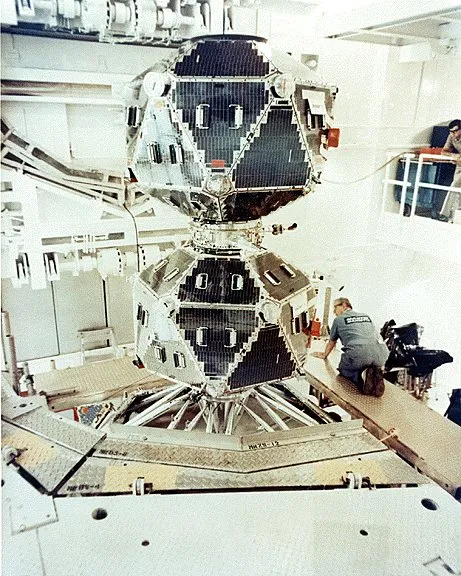
22 September 1979, 00:53 UTC: the Vela 6911 double flash
A ten-year-old US satellite, two years past its design lifetime, recorded a characteristic nuclear double flash over the southern Indian Ocean at 00:53 UTC. The CIA's first scientific panel called the signal consistent with a nuclear explosion. A second White House panel, eight months later, called it probably not nuclear. The CIA, DIA, Naval Research Laboratory, and Energy Department dissented; CIA later settled on '90% plus.' Forty years on, peer-reviewed reanalyses say the optical, hydroacoustic, and radionuclide evidence is consistent with a small atmospheric test. No government has confirmed.
The open question What produced the characteristic nuclear-detonation double flash recorded by the Vela 6911 satellite at 00:53 UTC on 22 September 1979, given the unresolved conflict between the White House Ruina Panel's 'probably not nuclear' finding and the CIA, DIA, Energy Department, and Naval Research Laboratory record pointing toward a small atmospheric nuclear test?
-
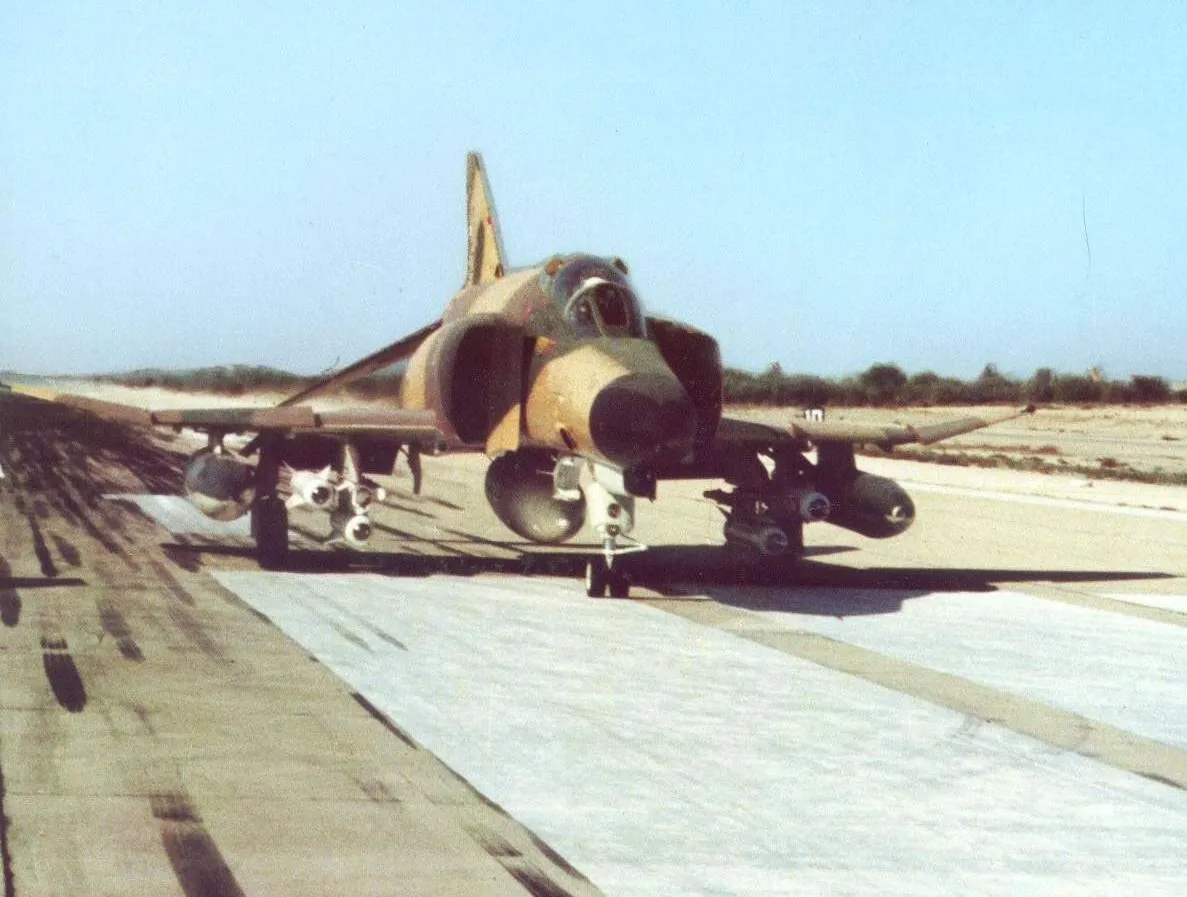
The Report That Outlived the Night: The 1976 Tehran F-4 Encounter
Two Iranian fighter crews chased a brilliant object over the capital and reported their instruments failing as they closed in. The only hard artifact is a single US cable that relays their account and rates it a classic, and fifty years on the central claim still cannot be tested.
The open question Were the crews' proximity-correlated systems failures an effect of the encounter or a coincidence of known equipment faults, and is there any way left, fifty years on, to decide?
-
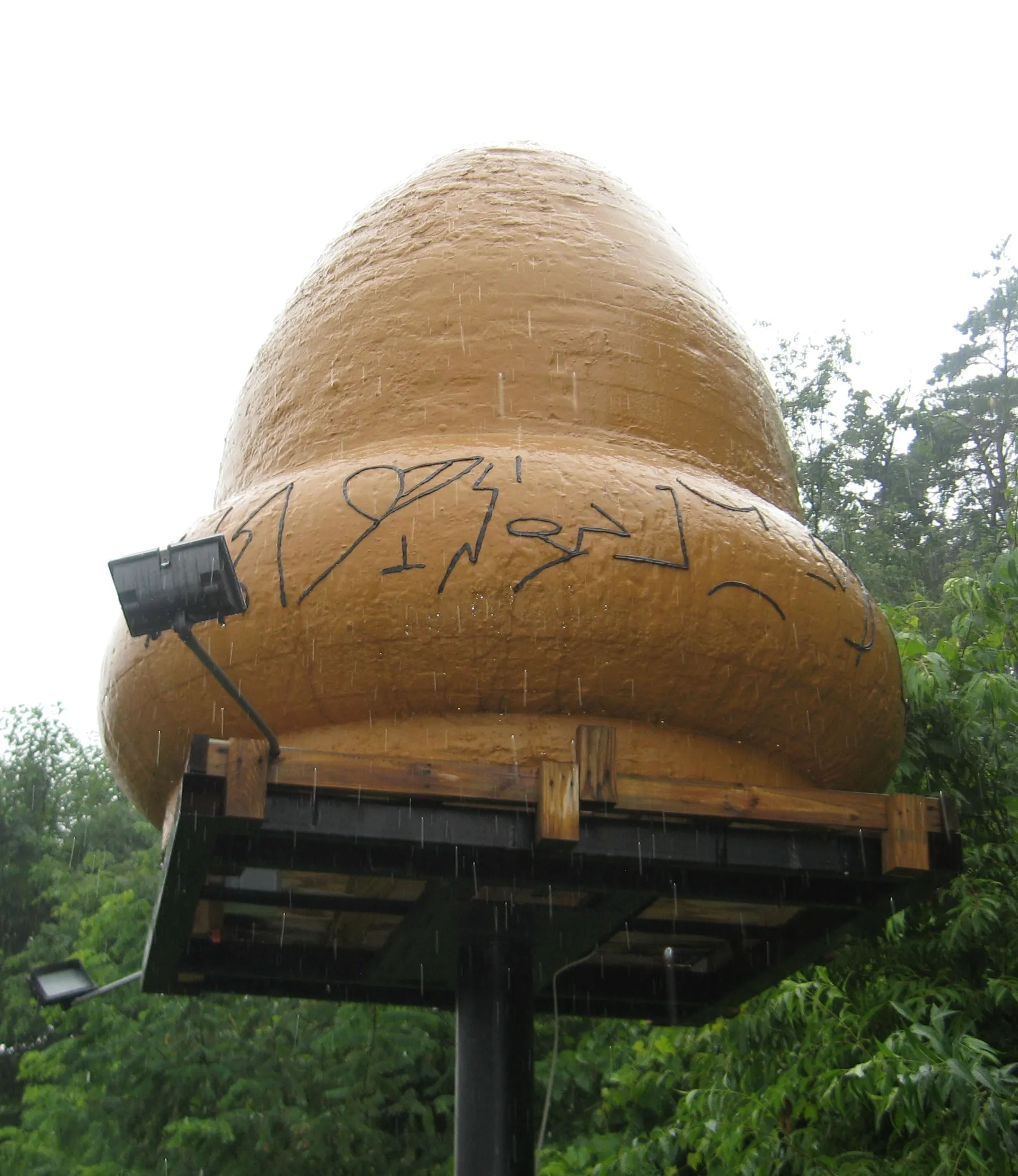
The Acorn in the Woods: The 1965 Kecksburg Incident
On 9 December 1965, a fireball crossed the sky over nine US states and southwestern Ontario, and a Pennsylvania newspaper reported that same evening that the Army had sealed off woods near a small village. The official record calls it a meteor and says nothing was found. Decades of witness accounts describe a retrieved craft carried out on a flatbed truck, and the NASA records that might have settled the question went missing.
The open question Did anything solid actually come down in the Kecksburg woods on 9 December 1965, or did a natural fireball and a cautious military response get transformed by memory and retelling into a retrieved craft?
-
The Aluminum Egg in the Arroyo: The Socorro UFO Encounter, 24 April 1964
A Socorro Police officer signed a statement within hours describing a silver egg-shaped object and two figures in white coveralls in an arroyo at the southern edge of town, Project Blue Book Case 8766 was classified UNIDENTIFIED and J. Allen Hynek called it the best-documented case in the file, and a 2009 hoax hypothesis built on a 1968 Stirling Colgate marginal note to Linus Pauling has been contested by Stanford, Sheaffer, and Randle, leaving the cause genuinely unresolved sixty-two years on.
The open question What did Socorro Police Officer Lonnie Zamora encounter in an arroyo on the southern edge of Socorro, New Mexico at approximately 5:45 PM on 24 April 1964: an anomalous craft of unknown origin as Hynek and Stanford concluded, an engineered student prank as Bragalia argued in 2009 citing Colgate, a classified US military test vehicle, or something else entirely?
-
The Boianai Mission Disc: Father William Gill and the Sightings of 26 to 28 June 1959
On three evenings in June 1959 an Anglican priest and roughly 38 mission staff and Papuan community members at Boianai on Goodenough Bay recorded a structured disc and four figures on its upper deck, with a reciprocal-wave element on the second night; the Cruttwell 1960 compilation, a 1959 RAAF interview, and J. Allen Hynek's 1972 CE3 classification anchor the record, and 66 years on no skeptical reading has settled it.
The open question What did Father William Booth Gill and approximately 38 mission staff and Papuan community members witness over the Boianai Anglican mission station on the evenings of 26 to 28 June 1959, when across roughly four hours on the first night and a further hour on the second night they recorded a large solid disc with a wider lower deck and narrower upper deck, four legs underneath, four glowing portholes, and four humanoid figures on the upper deck that on 27 June appeared to wave back to Gill's wave and respond with wavering motions to his torch flashes, when the Cruttwell 1960 limited-distribution compilation gathered the witness statements within months, when Royal Australian Air Force Squadron Leader F.A. Lang interviewed Gill at the Directorate of Air Force Intelligence on 29 December 1959 six months after the sighting and attributed the lights to Jupiter, Saturn, and Mars seen through fast-moving cloud, when J. Allen Hynek classed the case as a Close Encounter of the Third Kind in The UFO Experience in 1972 and in 1973 he and Cruttwell located six of the witnesses who corroborated Gill on direction and manner of approach, and when 66 years on no skeptical reading from the Donald Menzel Venus-and-optical-defects line through the Robert Sheaffer extension and the Martin Kottmeyer 2013 squid-fishing-boat hypothesis has settled the question?
-
Four Frames Off a Navy Deck: The 1958 Trindade Island Photographs
A civilian photographer aboard a Brazilian Navy ship caught a Saturn-shaped object on four exposures, the Navy examined the negatives, and a president helped release them. What none of that ever settled is whether the object was real.
The open question Do the four photographs record a genuine unidentified object, a skilled fabrication, or a misidentified mundane one, given that six decades of analysis have never settled the question?
-
Hockley County, Texas, 2 to 3 November 1957: the Levelland UFO sightings
For about four hours on a flat West Texas night, a single police dispatcher logged roughly fifteen independent reports of a luminous object that allegedly stalled engines and killed headlights, and sixty-eight years later the Project Blue Book ball-lightning ruling still has not held against the people who looked at it again.
The open question What did approximately fifteen independent witnesses on rural roads in Hockley County encounter on the night of 2 to 3 November 1957, and does the Project Blue Book ball-lightning ruling sustain on modern reanalysis?
-
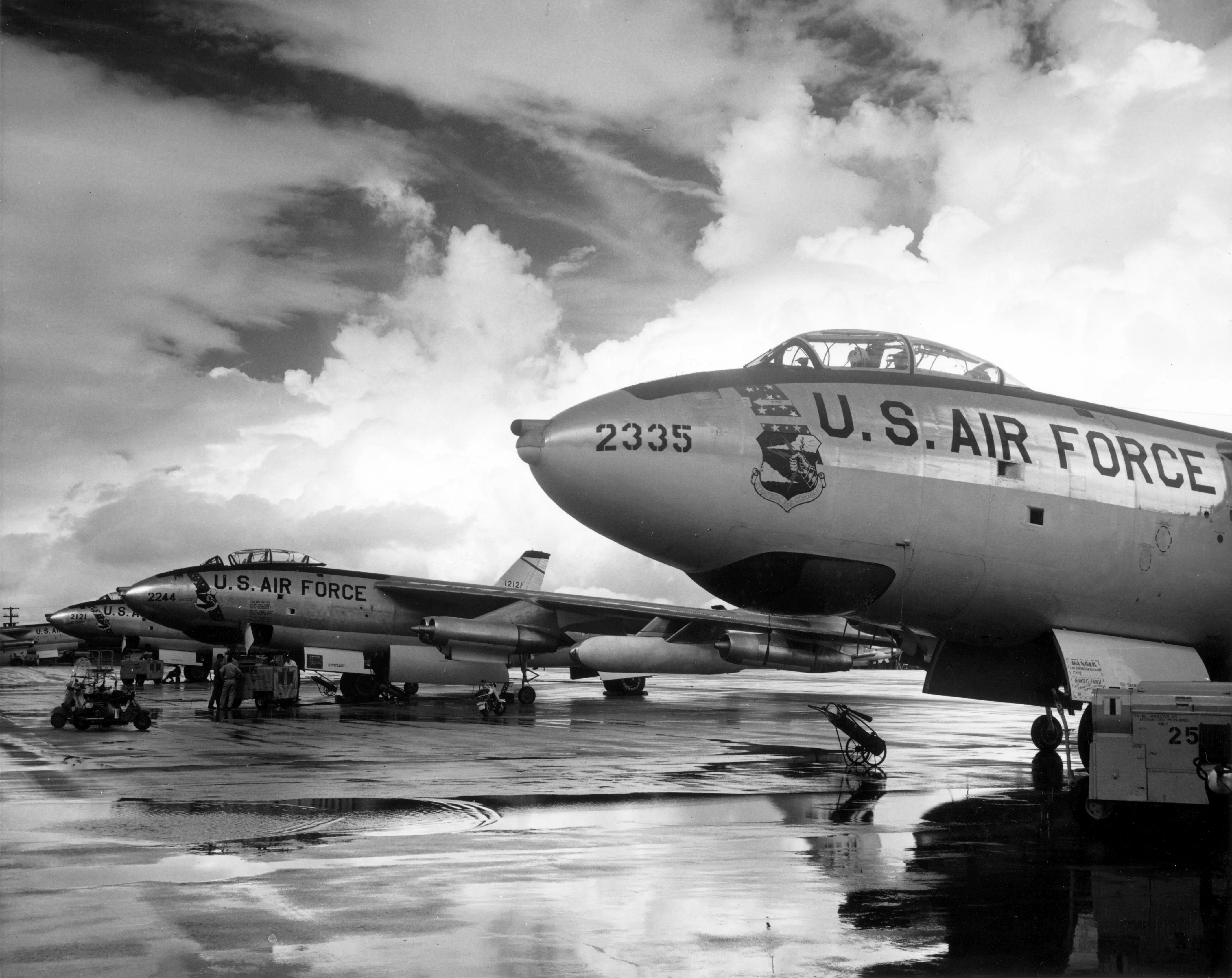
The Light That Showed Up on Three Machines: The 1957 RB-47 Encounter
For more than an hour over the American South, a reconnaissance jet's crew, its electronic gear, and a ground radar all reported the same thing in the dark. Then it vanished from all three at once.
The open question What was the object that three independent systems (the crew's eyes, the aircraft's passive S-band ELINT receivers, and ground radar) appeared to register together, holding a constant bearing against a 500 mph jet and vanishing from all three at the same instant?
-
Two Bases, Three Radars, One Interceptor: The Lakenheath-Bentwaters Incident, 1956
On the night of 13 to 14 August 1956, USAF and RAF radar operators at two bases in eastern England tracked targets they could not identify on multiple independent radars, with time-correlated ground and airborne visual sightings. Twelve years later the Condon Report called it the most puzzling case in its radar-visual files, and seventy years on the controllers' contemporaneous account and the interceptor crews' own recollections still do not agree.
The open question What did the Bentwaters and Lakenheath radars track on the night of 13 to 14 August 1956, and why has no prosaic explanation become broadly accepted in the seventy years since?
-
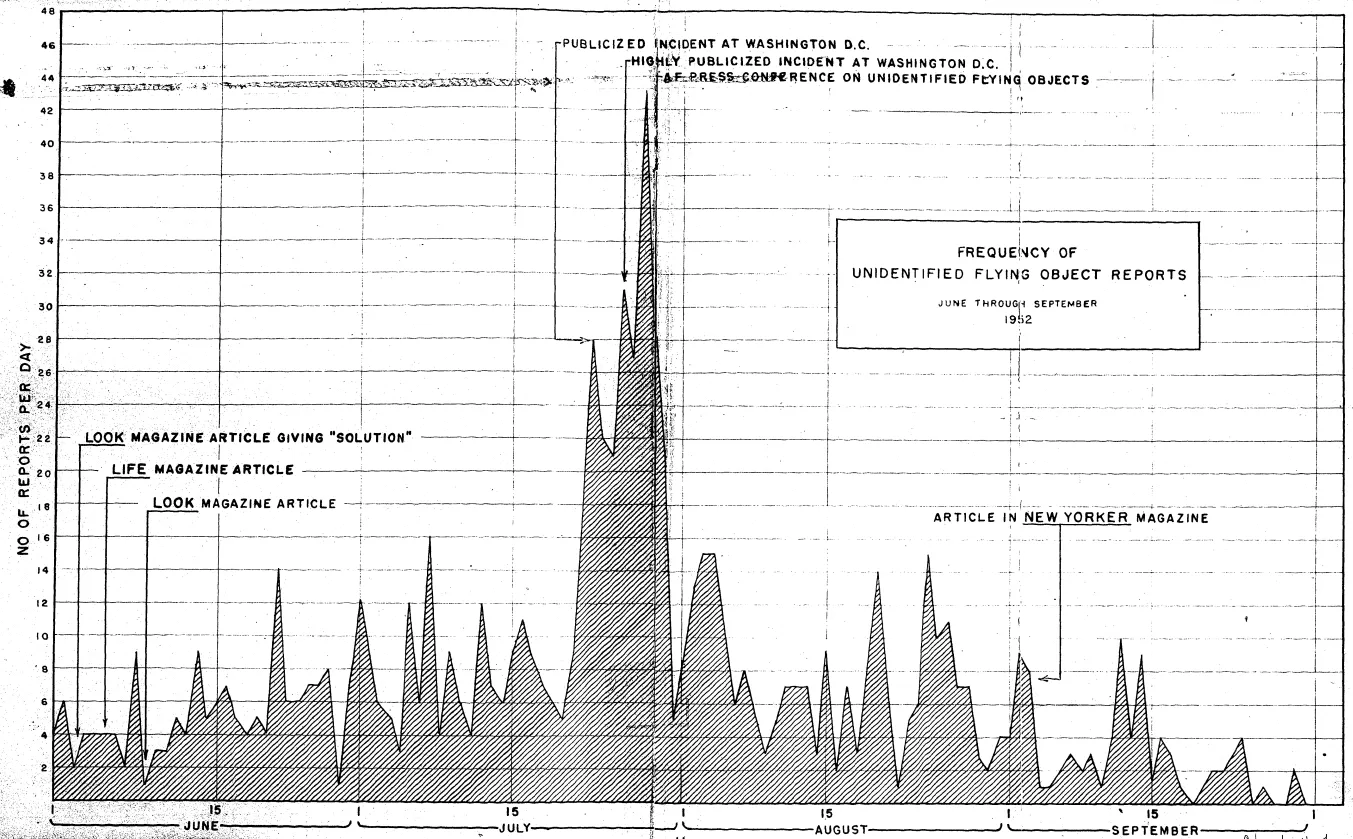
Targets Over the Capital: The Washington Radar Flap, 1952
Over two July weekends in 1952, unidentified targets were tracked on radar at three facilities around Washington and seen by airline pilots and ground observers; jets were scrambled, and the Air Force held a major press conference blaming a temperature inversion. But the controllers who watched the scopes disputed that explanation, and the radar-visual flap over the capital has never been fully settled.
The open question Were the targets tracked over Washington on those two July 1952 nights anomalous radar propagation from a temperature inversion, as the Air Force concluded, or something the experienced controllers were right to insist they had never seen behave that way?
-
Sixteen Seconds Over Great Falls: The Mariana UFO Film, 1950
A baseball manager filmed two bright objects moving over a Montana ballpark on a workday morning. Three independent scientific examinations across twenty years rejected the Air Force's explanation, and none of them ever produced a different one.
The open question If three independent scientific examinations across two decades rejected the Air Force's F-94 reflection explanation, and none produced a positive alternative identification, what does the surviving sixteen seconds of color film actually show?
-
Near Montgomery, Alabama, 02:45 CST 24 July 1948: the Chiles-Whitted UFO encounter
Two Eastern Air Lines pilots signed sworn statements within forty-eight hours describing a wingless object passing their DC-3, a Project Sign intelligence assessment built partly on their account reached the USAF Chief of Staff in October 1948 and was rejected and ordered destroyed, and seventy-eight years later neither the sighting nor the document have been settled.
The open question What did Captain Chiles and First Officer Whitted encounter at 02:45 CST on 24 July 1948 in their Eastern Air Lines DC-3 about twenty miles southwest of Montgomery, Alabama, and did the Project Sign Estimate of the Situation that General Vandenberg rejected and ordered destroyed in October 1948 correctly identify it as extraterrestrial?
-
The 415th Night Fighter Squadron, 27 November 1944: the case the Air Ministry called 'still something of a mystery'
A US Army Air Forces night-fighter squadron over the Rhine logged fourteen separate sightings of glowing orange spheres that paced their Beaufighters and registered on no radar. The chain of inquiry ran from the squadron to XII Tactical Air Command, to SHAEF, to the British Air Ministry, which on 13 March 1945 put in writing that 'the whole affair is still something of a mystery.' SHAEF closed the file five days later with 'no further, or more definite, information.' Eighty years on, no postwar interrogation, no archival find, and no convened panel has produced an identification.
The open question What were the glowing orange spheres that flew with Allied night-fighter aircraft over the Rhine and with B-29 crews over Japan in late 1944 and 1945, given that the Air Ministry called the matter still a mystery on 13 March 1945, no postwar German weapons programme ever matched the reports, and the Robertson Panel's 1953 dismissal was tentative rather than evidentiary?
-
Los Angeles, 25 February 1942: the Cabinet that couldn't agree
At 03:16 PWT the 37th Coast Artillery Brigade opened fire over Los Angeles and did not stop for nearly an hour. By the afternoon the Secretary of the Navy told reporters there had been no planes. The next morning the Secretary of War, citing the Army Chief of Staff, said there had been as many as fifteen. Two Cabinet officers, the same week, the same event, incompatible accounts. The contradiction was never reconciled.
The open question What did the 37th Coast Artillery Brigade fire 1,440 rounds at over Los Angeles in the early hours of 25 February 1942, given that the Secretary of the Navy called it a false alarm and the Secretary of War, the next day, called it as many as fifteen unidentified aircraft?