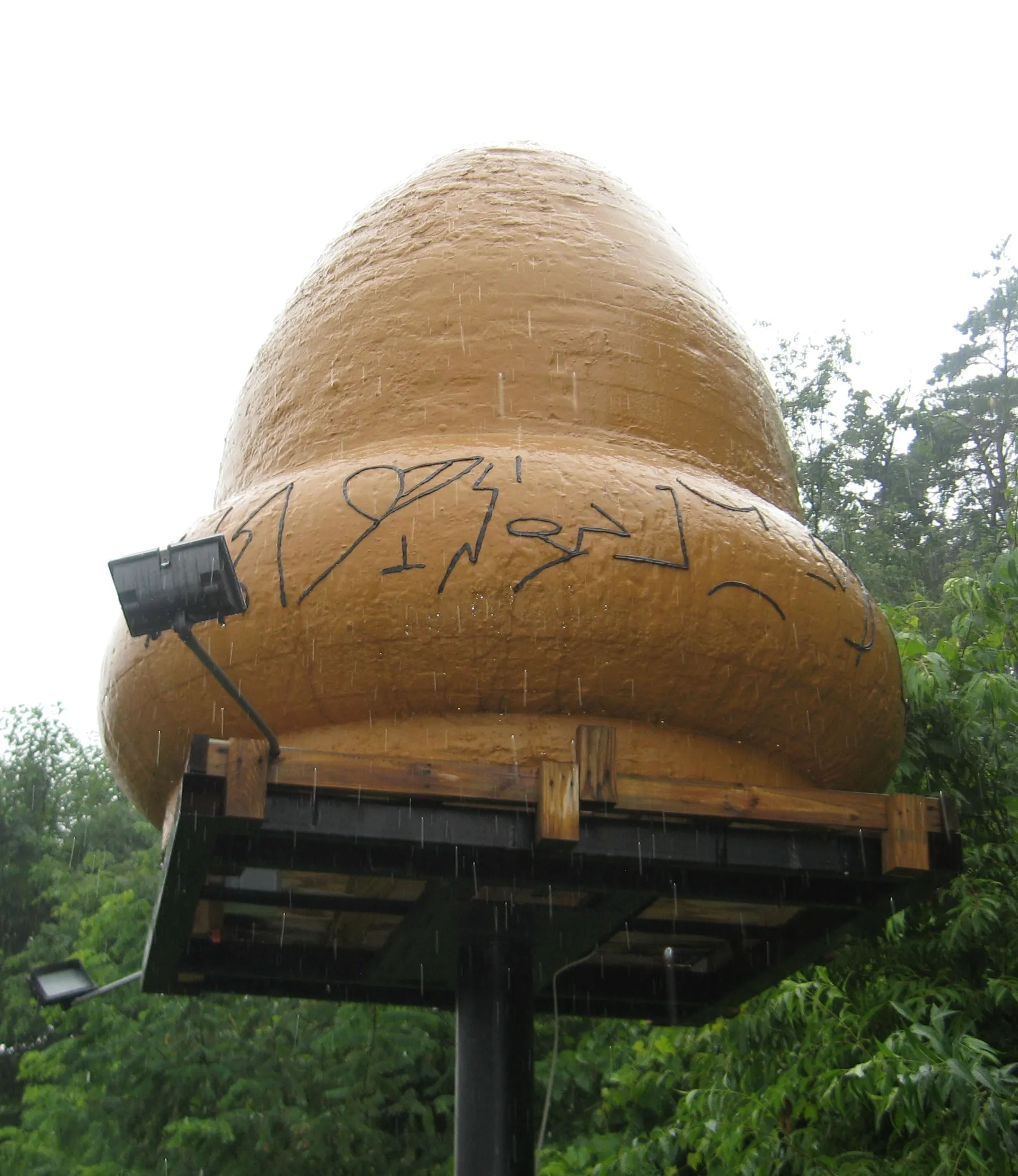
UFO/UAP Case file
The Acorn in the Woods: The 1965 Kecksburg Incident
On 9 December 1965, a fireball crossed the sky over nine US states and southwestern Ontario, and a Pennsylvania newspaper reported that same evening that the Army had sealed off woods near a small village. The official record calls it a meteor and says nothing was found. Decades of witness accounts describe a retrieved craft carried out on a flatbed truck, and the NASA records that might have settled the question went missing.
- Case type
- UAP
- Status
- Unexplained
- Event date
- December 9, 1965
- Location
- Kecksburg, Westmoreland County, Pennsylvania (the fireball was seen across several US states and southwestern Ontario; the reported object came down in woods near the village) - United States
- Evidence
-
- Testimonial
- Official record
The open question Did anything solid actually come down in the Kecksburg woods on 9 December 1965, or did a natural fireball and a cautious military response get transformed by memory and retelling into a retrieved craft?
Late in the afternoon of 9 December 1965, a brilliant fireball crossed the sky and was seen across southwestern Ontario and at least eight or nine US states, from Michigan to New York. The astronomers who looked at it called it what it appeared to be: a natural meteor bolide on a steep descent, most likely ending its run over Lake Erie. That much is well documented. What happened next around the Pennsylvania village of Kecksburg is where the case splits in two, and stays split sixty years later.
The next morning, a local paper reported that the Army and the State Police had sealed off woods near the village the previous evening. Over the following decades, witnesses interviewed mainly by one investigator, and featured on a 1990 network television segment and a 2003 cable documentary, described far more than a sealed wood: an acorn-shaped metal object with markings like hieroglyphics, an armed cordon, and a flatbed truck hauling something away under a tarpaulin. No such object has ever been publicly produced or authenticated. And the records held by NASA that might have settled the matter were, by the agency’s own account, lost.
This is an account of what the record establishes, what the witnesses say, and what the explanations can and cannot carry. Three things have to be held apart and never allowed to blur into one another: what is documented, what is testimony given years to decades after the fact, and what is hypothesis. We keep them separate throughout.
The documented account
The fireball. On 9 December 1965, at roughly 4:43 to 4:44 p.m. EST (21:43 UT), a large fireball crossed the sky over the Great Lakes region, the US Northeast and Midwest, and southwestern Ontario. The timing comes from the scientific literature of the period: Sky & Telescope (February 1966) gave the time as about 4:44 p.m. EST, and a 1967 paper in the Journal of the Royal Astronomical Society of Canada placed its passage over Detroit at about 4:43 p.m. Reports of hot metal debris over Michigan and Ohio, of grass fires, and of sonic booms near Pittsburgh were attributed to it. Astronomers at the time, among them Paul Annear, William P. Bidelman, and Fred Hess, identified it as a meteor bolide. This is the strongest documented anchor in the case, and it describes an event in the sky.
The first local reports. That evening, calls came in from the Kecksburg area about smoke in the woods and something having come down. One of the first reports is commonly attributed to a local resident, Frances Kalp, who is said to have telephoned radio station WHJB in Greensburg around 6:30 p.m. after her son saw a fiery object descend, and to have described something like a “four-pointed star” seen from about half a mile off. That first-report detail comes from later secondary retrospectives rather than a confirmed 1965 primary source, and we present it as such, not as established fact.
The press report. The Greensburg Tribune-Review published an account the next morning, 10 December 1965, written by staff writer Robert Gatty. As reported by the paper, the area “was immediately sealed off on the order of U.S. Army and State Police officials.” That single same-day, on-the-record line, attributed to the paper, is the documented core of the military-response strand: a contemporaneous account of an official cordon. Fuller details often attached to the story, including the front-page headline wording and a line that the object “may be contaminated with radioactivity,” come to us through later retrospectives rather than a verified reading of the original 10 December edition, so we do not quote them as confirmed 1965 print. What the contemporaneous press documents is a sealed-off wood, not a recovered craft.
The official search. A US Air Force Project Blue Book file exists for the event and concludes that it was a meteor. By secondary descriptions of that file, the Blue Book director Major Hector Quintanilla advised the Pentagon to call it a meteor; a team from the Oakdale Radar Site, working with the State Highway Patrol, searched the area but was unsuccessful in finding any object; the detections were visual rather than radar; and the case was logged as an astronomical (meteor) event and closed. We report those as the file’s documented conclusion (meteor, nothing found) rather than as verbatim file text, because the exact wording rests on paraphrase and should be read from the primary document.
The witness retrieval accounts (testimony, given years to decades later). Here the record gives way to testimony. Over the decades that followed, witnesses interviewed primarily by the investigator Stan Gordon, and featured on the 1990 NBC Unsolved Mysteries episode and the 2003 Sci Fi Channel documentary, described a recovered object and a military removal. None of this is contemporaneous 1965 documentation. It is later testimony, attributed to named people, and we present it that way.
In accounts collected by Gordon, the witness Jim Romansky described an acorn-shaped, bronze or bronze-gold, seamless metal object roughly the size of a Volkswagen Beetle, bearing markings he likened to Egyptian hieroglyphics; a similar description was carried on the 1990 Unsolved Mysteries segment. The musician Jerry Betters told Gordon that armed soldiers cordoned the area and aimed rifles at him and others. John Hays, who said he was ten years old at the time, stated on the 1990 episode, and again on the 2003 documentary, that he saw a flatbed truck carrying something the size of a VW leave the site. Gordon also attributes to witnesses an account of a military flatbed tractor-trailer carrying a large tarpaulin-covered object leaving the area at high speed late that night. And the WHJB radio news director John Murphy is said, in an account given to Gordon by Murphy’s former wife after Murphy’s death, to have gone into the woods, seen and photographed the object, and then had his photographs confiscated, after which a radio documentary he produced, “Object in the Woods,” was edited. That confiscation account is second-hand testimony about a deceased man, and we treat it strictly as an attributed claim.
None of these retrieval or confiscation accounts is corroborated by a produced object or by any official record acknowledging a recovery. They are consistent with one another, and they are testimony. The documented record underneath them is narrow: a fireball in the sky, and a same-day newspaper report of a sealed-off wood.
The evidence
Each channel of evidence is worth weighing for what it actually establishes and where it stops.
The fireball and the astronomical analysis. The multi-state sightings, the contemporaneous press, and two pieces of scientific literature (Sky & Telescope, 1966; the JRASC paper, 1967) together treat the event as a natural bolide on a steep descent that most likely terminated near Lake Erie. The limit is precise and important: the astronomical record explains a fireball overhead. It cannot confirm a separate solid object on the ground at Kecksburg, and if anything it argues the bolide ended its run over the lake, well away from the village.
The contemporaneous press. The Greensburg Tribune-Review of 10 December 1965 is the key primary print source, and its value is that it is a same-day, on-the-record account of a military and State Police cordon. Its limit is just as clear: the paper described an unidentified flying object and a sealed area. It is not an official confirmation that a craft was recovered. The famous acorn-and-hieroglyphics description does not appear to originate in the 1965 press; it surfaces later, in witness testimony.
The Project Blue Book file. A US Air Force file exists and concludes “meteor,” with a search that found nothing. The file is consistent with the meteor explanation and with no object having been found. Its limit is that both sides read it differently. To skeptics it is an ordinary closed meteor case; to proponents it is thin and possibly incomplete. The file documents an official conclusion, not the truth of what was or was not in the woods.
The witness testimony as a class. A number of named witnesses describe, with broad consistency, a landed object and a military removal. Consistency across witnesses is worth noting. But this testimony was recorded years to decades after 1965, much of it gathered through a single investigator and carried by a single television franchise, with the attendant risks of memory drift, cross-contamination between accounts, and the framing effects of dramatized media. Consistency under those conditions is not the same thing as physical evidence.
The NASA records and the FOIA litigation. What is documented here is procedural. The journalist Leslie Kean, backed by the Sci Fi Channel and the Coalition for Freedom of Information, filed a Freedom of Information Act request and then sued NASA. In December 2005, NASA stated that its experts had in 1965 examined metallic fragments deemed to be from a re-entering Soviet satellite, but that the records supporting those findings had been misplaced; by the agency’s account the relevant files were sent to the National Archives around 1967 and had been marked lost since 1987. A federal judge, Emmet Sullivan, ordered a further search, NASA was directed to pay roughly $50,000 in fees, and a court-monitored search was completed in 2009. By Kean’s own characterization, that search produced “no smoking gun.” The limit is the crucial one: this litigation proves that NASA’s initial searches were inadequate and that records are genuinely missing. It does not prove what those records contained.
The crucial absence. No physical object is in evidence. No craft, no fragment, no instrument reading has ever been publicly produced and authenticated. The entire retrieval layer rests on testimony plus the documented fact of a military cordon. That absence is the single most important thing to keep in view, and we state it plainly.
The theories
Everything in this section is a hypothesis. None has closed the case, and the speculation here is kept out of the account and the evidence above.
A natural meteor or bolide (the official and mainstream-science position). This is the explanation advanced by the 1965-67 astronomers, by the Air Force through Blue Book, and by skeptics including the space writer James Oberg, who has argued that the fireball “looks exactly like thousands of other natural bolides” with a computable natural-meteoroid trajectory. Its strength is that it fits the sky observations and the steep-descent data, and it is the leading explanation on the documented evidence. Its weakness, for a meteor-only reading, is that it does not by itself account for the same-day report of a cordon or the later consistent retrieval testimony. Skeptics attribute those to misperception of a frightening event combined with a cautious or routine military response to a reported impact, which is plausible but is itself an argument rather than a documented fact.
Re-entering space debris, specifically the Soviet probe Kosmos 96. This possibility was raised by NASA in its 2005 statement and discussed by Oberg, and it carries a nuance that has to be preserved exactly, because it cuts against itself. The Soviet Venus probe Kosmos 96 did reenter on 9 December 1965. But NASA’s own catalog entry states that the fireball’s path was “probably too steep” for an orbital reentry and that “U.S. Air Force tracking data on Cosmos 96 also indicate the spacecraft orbit decayed earlier than 21:43 UT,” which is the time of the fireball. Separately, Stan Gordon has reported that Russian officials told him Kosmos 96 reentered at 3:18 a.m. that day, many hours before the afternoon fireball, and that the Russians said it was not the source. That 3:18 a.m. figure is an attributed claim rather than a confirmed orbital datum, and it conflicts in form with NASA’s “decayed earlier than 21:43 UT” without necessarily contradicting it in substance. The honest state of this strand is that it is contested even within official sources: NASA invoked a Soviet satellite in 2005, while NASA’s own orbital analysis argues against Kosmos 96 in particular, and the records that might have named whatever satellite NASA meant are the lost ones. The Kosmos 96 explanation is neither cleanly established nor cleanly ruled out.
A recovered craft and a government cover-up (attributed claim, not established). This is the reading that has earned Kecksburg the label “Pennsylvania’s Roswell,” and it is advanced by the witnesses through Gordon’s investigation and the television treatments, and framed by Leslie Kean as an open question about missing records. It must be handled strictly as an attributed claim and an open question. The documented core under it is narrow: a same-day press report of a cordon, consistent later testimony of a landed object and a flatbed removal, and demonstrably missing NASA records. None of that establishes a recovered craft, and none of it establishes deliberate concealment. NASA’s lost records are a documented fact; an inference that they were deliberately destroyed or that any named official lied is not, and we do not assert it. Kean herself put the open question in conditional terms, asking whether the object could have been “a very secret U.S. project” and noting, “If it was our own, why couldn’t they tell us about this 40 years later?” Even Gordon, the investigator closest to the witnesses, declines to assert an extraterrestrial answer. He says he does not know, and lists two possibilities: an advanced man-made re-entry-capable probe, or an extraterrestrial craft.
A misidentified man-made re-entry object. A variant skeptical hypothesis is that if any solid object was present, it was a man-made re-entry test article rather than anything exotic. One claim circulated online identifies it as a GE Mark 2 re-entry vehicle. That specific identification is unverified, and we flag it as such. It belongs here as a possibility, not as a finding.
The open questions that remain genuinely unresolved are these. Was there a solid object on the ground at all, or only a bolide overhead and a cautious, possibly secretive, military response to a reported impact? Why were NASA’s relevant records lost, and what did they contain? If a recovery occurred, by whom, and of what?
What remains unknown
Set the explanations side by side and the same hard residue survives all of them. The documented record is short. A fireball crossed nine states and Ontario on the afternoon of 9 December 1965, the astronomy of the period read it as a natural bolide likely ending over Lake Erie, and a Pennsylvania newspaper reported that same evening that the Army and the State Police had sealed off woods near Kecksburg. The Air Force’s file calls the event a meteor and records that a search found nothing. Everything beyond that, the acorn-shaped object, the markings, the armed cordon, the flatbed truck, the confiscated photographs, comes to us as testimony given years to decades later, attributed to named witnesses and carried largely by one investigator and one television franchise. And the NASA records that might have anchored or dissolved the question are missing, which the agency’s own conduct in court confirms.
What is not settled, and may never be from the surviving record, is whether anything solid came down in those woods at all. The astronomical case argues the fireball ended elsewhere. The witness case describes a retrieval that left no producible object. The records that sit between them are gone.
So we will not tell you a craft was recovered, because no object has ever been produced or authenticated and the documented core is only a fireball and a cordon. We will not tell you it was Kosmos 96, because NASA’s own orbital analysis argues against that satellite and the timing does not line up. We will not tell you there was a cover-up, because what the documents actually show is a state that lost its records and a court that had to force a fuller search, not proof that anyone destroyed evidence or lied. And we will not tell you it was nothing, because a same-day newspaper documented a military cordon, and a consistent body of named witnesses describes a removal that the meteor verdict does not, by itself, explain away. The value of the case is exactly that it is unresolved. Something crossed the sky that afternoon, an official line of woods was sealed, the records that could have closed the gap went missing, and sixty years later the gap is still open.
Sources
Primary / closest-to-primary
- NASA NSSDCA, Cosmos 96 spacecraft (catalog 1965-094A)
- James Oberg, “Statement on NASA and Kecksburg” (jamesoberg.com)
- US Air Force Project Blue Book file, 9 Dec 1965 event (The Black Vault case file)
- Kean v. National Aeronautics and Space Admin., 480 F. Supp. 2d 150 (CourtListener)
- Greensburg Tribune-Review, 10 December 1965, staff writer Robert Gatty (contemporaneous print; access via newspaper archive/microfilm).
- Sky & Telescope, February 1966 (fireball timing, ~4:44 p.m. EST).
- Journal of the Royal Astronomical Society of Canada, 1967 (fireball trajectory and steep descent).
Secondary / contextual
- Wikipedia, “Kecksburg UFO incident”
- Wikipedia, “Kosmos 96”
- Stan Gordon, “Kecksburg” (stangordon.info)
- Reporters Committee for Freedom of the Press, “Judge forces NASA to take a giant leap in FOIA suit”
- Space.com / NBC News, “Is case finally closed on 1965 UFO mystery?”
- VICE, “The most important UFO crash happened in Pennsylvania, not Roswell”
- Pennsylvania Center for the Book (Penn State Libraries), “Acorn from Space: The Kecksburg Incident”
- Tim Printy, “An earthly source” (astronomyufo.com)
- Enigma Labs library entry, Kecksburg