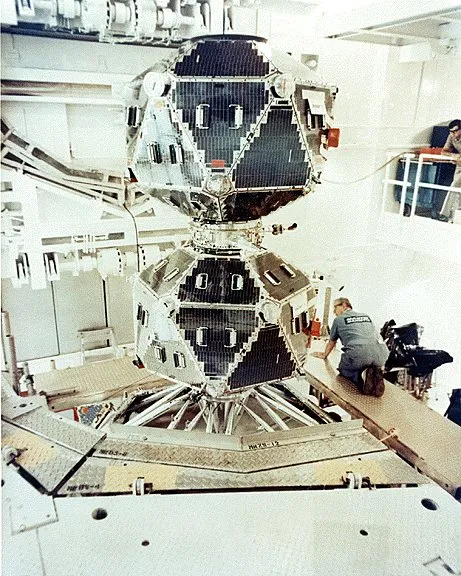
UAP Case file
22 September 1979, 00:53 UTC: the Vela 6911 double flash
A ten-year-old US satellite, two years past its design lifetime, recorded a characteristic nuclear double flash over the southern Indian Ocean at 00:53 UTC. The CIA's first scientific panel called the signal consistent with a nuclear explosion. A second White House panel, eight months later, called it probably not nuclear. The CIA, DIA, Naval Research Laboratory, and Energy Department dissented; CIA later settled on '90% plus.' Forty years on, peer-reviewed reanalyses say the optical, hydroacoustic, and radionuclide evidence is consistent with a small atmospheric test. No government has confirmed.
- Case type
- UAP
- Status
- Disputed
- Event date
- September 22, 1979
- Location
- Southern Indian Ocean, between the Prince Edward Islands and the Crozet Islands - Indian Ocean
- Evidence
-
- Instrumental
- Official record
- Physical
The open question What produced the characteristic nuclear-detonation double flash recorded by the Vela 6911 satellite at 00:53 UTC on 22 September 1979, given the unresolved conflict between the White House Ruina Panel's 'probably not nuclear' finding and the CIA, DIA, Energy Department, and Naval Research Laboratory record pointing toward a small atmospheric nuclear test?
At 00:53 UTC on 22 September 1979 the two silicon bhangmeters aboard a ten-year-old US satellite recorded a double flash over the southern Indian Ocean. The satellite was OPS 6911, also designated Vela 5B, launched 23 May 1969 and two years past its design lifetime. Its bhangmeters were optical detectors tuned to the characteristic signature of an atmospheric nuclear explosion: a first pulse from the fireball shockwave, a second from the radiating bomb debris. The Vela signature had previously identified forty-one atmospheric tests. The 00:53 signal fell within it.
Within weeks the CIA convened a Nuclear Intelligence Panel and reported the signals consistent with the detection of a nuclear explosion in the atmosphere. The White House Science Adviser, Frank Press, then commissioned a second, independent panel under the MIT engineer Jack Ruina. The Ruina Panel reported on 17 July 1980 that the signal was probably not from a nuclear explosion. The CIA, DIA, Department of Energy, weapons laboratories, and Naval Research Laboratory pushed against that conclusion through the first half of 1980. CIA settled internally on a probability of “90% plus” that the event was nuclear. A DIA vice director’s memo of June 1980 called the Ruina finding a “white wash, due to political considerations” resting on “flimsy evidence.”
That institutional dispute is the case. Two peer-reviewed reanalyses by Christopher M. Wright and Lars-Erik De Geer (2017, 2018) concluded that the bhangmeter optical record, a contemporaneous Naval Research Laboratory hydroacoustic study, and iodine-131 detections in Australian sheep thyroid samples are together consistent with a small atmospheric nuclear test in the maritime location the hydrophones identified. The naming of Israel and South Africa in the test-attribution literature is on the documentary and scholarly record. Neither government has ever confirmed.
This piece is the case of the case. The three layers below are kept separate.
The documented account
The Vela program was a joint Atomic Energy Commission and Department of Defense satellite system commissioned to verify the 1963 Limited Test Ban Treaty. OPS 6911 was the last operational Vela of its generation. Its bhangmeter technique reads the characteristic two-pulse light curve of an atmospheric nuclear fireball; the second pulse, on the millisecond scale, distinguishes a nuclear event from lightning, meteoroid impact, or instrument artefact.
At 00:53 UTC on 22 September 1979 the OPS 6911 bhangmeters logged a double flash over the southern Indian Ocean, in the area between the Prince Edward Islands (South African territory) and the Crozet Islands (French territory). Bhangmeter-derived coordinates were approximately 47°S 40°E. The signal was logged at the Air Force Technical Applications Center, which managed Vela-system telemetry, and forwarded to the White House Situation Room. A White House Situation Room log entry dated 25 October 1979 sits in the National Security Archive’s Vela briefing books edited by William Burr.
The CIA Nuclear Intelligence Panel convened in October 1979. Its three members were Harold M. Agnew, former director of Los Alamos National Laboratory; Richard L. Garwin of IBM Research, who had worked on the design of the first thermonuclear weapon; and Stephen Lukasik, chief scientist of the Federal Communications Commission and former director of DARPA. On the optical signature alone the panel concluded that the signals were consistent with the detection of a nuclear explosion in the atmosphere. Garwin’s October 1979 internal note bet two to one in favour of the nuclear hypothesis.
Frank Press, Carter’s Science Adviser, commissioned a second, independent panel in late October and early November 1979 to evaluate the same data. The chair was Jack Ruina, an MIT electrical engineering professor and former DARPA director. Members included Garwin (who also served on the CIA panel), Wolfgang K. H. Panofsky of Stanford, Luis W. Alvarez of Berkeley, Burton Richter of Stanford, and Richard A. Muller of Berkeley. The panel began work on 1 November 1979 and reported on 17 July 1980. Its final language: based on its experience in related scientific assessments, it was the panel’s collective judgment that the September 22 signal was probably not from a nuclear explosion. The redacted report is in the National Security Archive’s Vela briefing books; the unredacted version is posted by the Federation of American Scientists.
The Ruina Panel rested its negative finding on an anomaly in the ratio of intensities measured by the two bhangmeter detectors during the second pulse. It proposed a “zoo event,” most plausibly a sunlight reflection off a small meteoroid impacting the aging satellite. The reasoning was a probabilistic judgment about the signal’s reliability rather than a positive identification of a non-nuclear cause; the panel acknowledged it could not rule out a nuclear origin.
The dissenting institutional record runs through the first half of 1980. A 25 January 1980 memo by Jerry Oplinger to Henry Owen and Zbigniew Brzezinski summarised a CIA assessment placing the probability of a nuclear test at “90% plus.” A June 1980 memo by DIA Vice Director Jack Varona called the Ruina conclusion a “white wash, due to political considerations,” based on “flimsy evidence,” and stated that the weight of the evidence pointed towards a nuclear event. President Carter’s diary entry of 27 February 1980 reads: “We have a growing belief among our scientists that the Israelis did indeed conduct a nuclear test explosion in the ocean near the southern end of South Africa.”
The evidence
The record falls into three instrumental pillars and a layer of contemporaneous institutional documentation.
The Vela 6911 bhangmeter optical record. The two-channel light curve at 00:53 UTC, analysed by the CIA panel in October 1979, the Ruina Panel from November 1979 through July 1980, and reanalysed by Wright and De Geer in Science & Global Security 25 no. 3 (2017). Cuts one way: the shape and timing fell within the same signature that had identified forty-one prior atmospheric tests; the CIA panel called it consistent with a nuclear detonation. Cuts the other: the Ruina Panel identified an anomaly in the second-pulse intensity ratio between the two detectors. Wright and De Geer 2017 argue the anomaly was a feature of all confirmed nuclear detonations Vela had detected, given the satellite’s age.
The Naval Research Laboratory hydroacoustic study, 1980. The NRL examined the Missile Impact Locating System (MILS) network of underwater hydrophones, identified signals “unique to nuclear shots in a maritime environment,” and traced them to a source in shallow waters between the Prince Edward Islands and Marion Island, approximately 955 nautical miles south of the South African coast. Cuts one way: the hydrophone array provided an independent instrumental locator and a maritime-nuclear signature match. Cuts the other: the Ruina Panel did not address the NRL record; its analytical focus was the optical data alone.
The Australian sheep thyroid iodine-131 detections. From the 1950s through the 1980s the United States routinely received monthly thyroid samples from sheep slaughtered in Melbourne. Samples from three different slaughter dates after 22 September 1979 showed the two characteristic gamma-ray emission lines of iodine-131, a short-half-life fission product. The sheep had grazed in Victoria and Tasmania, in areas placed downwind of the suspected explosion site by contemporaneous weather modelling and that had received rain about four days after the optical flash. Reanalysed in De Geer and Wright, Science & Global Security 26 no. 1 (2018). Cuts one way: iodine-131 with the correct half-life signature on downwind grazing land within the expected fallout window is a physical evidence chain external to the optical and acoustic data. Cuts the other: the samples passed through a long collection chain; precise reception laboratories and the yield estimate remain verification points.
The two panel reports. The CIA Nuclear Intelligence Panel of October 1979 (Agnew, Garwin, Lukasik) reported the signals “consistent with detection of a nuclear explosion in the atmosphere” on the bhangmeter record alone. The Ruina Panel of 17 July 1980 (chair Ruina; members Garwin, Panofsky, Alvarez, Richter, Muller) found the signal “probably not from a nuclear explosion,” resting on the second-pulse anomaly and the meteoroid-impact “zoo event” reading. Cuts one way: two panels of senior physicists and engineers read the same data and split. Cuts the other: the Ruina Panel acknowledged it could not rule out a nuclear origin, and CIA, DIA, the Department of Energy, the weapons laboratories, and NRL pushed back against its finding through the rest of 1980.
The dissenting memo record. The Oplinger memo of 25 January 1980 reports a CIA assessment placing the probability of a nuclear test at “90% plus.” The Varona memo of June 1980 calls the Ruina conclusion a “white wash, due to political considerations” on “flimsy evidence,” with the weight of the evidence pointing toward a nuclear event. Both are declassified through the National Security Archive. Cuts one way: contemporaneous senior-agency dissent in writing. Cuts the other: internal memoranda, not institutional findings.
The Carter diary entry of 27 February 1980. Published verbatim in White House Diary (Farrar, Straus and Giroux, 2010): “We have a growing belief among our scientists that the Israelis did indeed conduct a nuclear test explosion in the ocean near the southern end of South Africa.” Cuts one way: a serving president’s contemporaneous note of the scientific belief inside his administration. Cuts the other: a diary entry records a growing belief, not a confirmation.
The Los Alamos analysis of TIROS-N data, 1981. A Los Alamos National Laboratory report analysed plasma data from the TIROS-N meteorological satellite, which had been advanced as a possible auroral-arc alternative to the bhangmeter signal. The report found no evidence to support a connection between the auroral event and a surface nuclear burst, concluding that the auroral arc probably existed before the Vela event. Cuts one way: it removed the auroral-arc hypothesis on instrumental grounds. Cuts the other: removing one alternative does not establish the nuclear reading.
The CBS News report and the Aziz Pahad statement. On 21 February 1980 Dan Raviv, CBS Tel Aviv correspondent, filed a report attributing the test to Israel with South African cooperation, citing an unpublished manuscript by Eli Teicher and Ami Dor-On; Israeli Defense Minister Ezer Weizman revoked Raviv’s credentials. In April 1997 Aziz Pahad, then South African deputy foreign minister, was widely reported at an arms-control conference to have confirmed a South African test. Within days his press office issued a clarification stating he had been summarising “longstanding rumours” and that he believed the matter should be investigated; he did not confirm a test. Cuts one way: both named the case in public from positions of standing. Cuts the other: the Raviv source manuscript remained unpublished, and the Pahad press-office clarification recharacterised the remarks within the same week.
Wright and De Geer 2017; De Geer and Wright 2018. Two peer-reviewed papers in Science & Global Security, the first reanalysing the bhangmeter optical record and the second the iodine-131 and NRL hydroacoustic chains, concluding the combined evidence is consistent with a small nuclear explosion. Cuts one way: the nuclear reading has been argued in detail in the open peer-reviewed literature. Cuts the other: peer review is not attribution; the papers do not name a state.
Hypotheses and open questions
Six hypotheses sit on the open record. Each is labeled and attributed. None is asserted as fact.
1. A small atmospheric nuclear test conducted by Israel, possibly with South African assistance. Sources: Hersh 1991; Reed and Stillman 2008; Polakow-Suransky 2010; Wright and De Geer 2017; De Geer and Wright 2018; Weiss 2015 and 2019; Carter diary 27 February 1980; the CIA “90% plus” assessment. Constraints: no government has officially confirmed; the Ruina Panel found the signature “probably not nuclear” on the second-pulse anomaly; no physical debris has been recovered. The neutron-bomb framing in Reed and Stillman 2008 is not established by declassified primary sources.
2. A nuclear test conducted by South Africa alone. Source: the Aziz Pahad April 1997 statement as initially reported. Constraints: the same-week press-office clarification recharacterised the remarks; David Albright’s published work on the South African programme found its known gun-type devices would not produce the small-yield signature consistent with the Vela record; South African officials in the post-apartheid disclosures denied a 1979 test.
3. A nuclear test conducted by another state. Sources: brief-period speculation including Indian, Pakistani, Taiwanese, or Soviet possibilities. Constraints: none had a credible operational reason to test in the southern Indian Ocean in September 1979, and the declassified Carter-administration record does not support these alternatives.
4. A “zoo event”: meteoroid impact on the aging Vela 6911 producing a sunlight-reflection signature that mimicked a nuclear double flash. Source: the Ruina Panel report of 17 July 1980. Constraints: the panel acknowledged it could not rule out a nuclear origin; Wright and De Geer 2017 argue the second-pulse anomaly the panel relied on was a feature of all confirmed Vela detonations; the panel did not address the NRL hydroacoustic record or the radionuclide evidence.
5. A “zoo event”: a natural electromagnetic or atmospheric phenomenon unrelated to a nuclear event. Sources: discussed in the panel record; Los Alamos 1981 ruled out the auroral-arc variant on TIROS-N plasma data. Constraints: no positive identification of a non-nuclear mechanism that would produce the bhangmeter signature, the NRL hydroacoustic signature, and the iodine-131 detections in concert.
6. The signal was real and nuclear, the Carter administration internally concluded it was Israeli, and the Ruina Panel was steered to a negative finding to preserve nonproliferation policy. Sources: the Varona memo of June 1980; Polakow-Suransky 2010; Weiss 2015 and 2019. Constraints: this is a hypothesis about institutional motivation; the record shows internal dissent against the Ruina conclusion but contains no directive to steer the panel.
What remains unknown
Forty-six years on, the file holds four institutional facts and no resolution. The bhangmeter detection is real, and the CIA’s October 1979 panel called the signal consistent with a nuclear explosion. The Ruina Panel’s July 1980 “probably not” finding is also real. The dissenting record is real: the NRL hydroacoustic trace; the iodine-131 in Australian sheep thyroid samples; the Varona “white wash” memo; the CIA “90% plus” assessment; the Carter diary entry of 27 February 1980. The canonical scholarly position since Wright and De Geer 2017-18 is that the optical, hydroacoustic, and radionuclide evidence is consistent with a small atmospheric nuclear test in the maritime location the hydrophones identified.
No government has ever confirmed. The naming of Israel and South Africa in this article runs through the Carter diary, the CIA assessment, the CBS News report of 21 February 1980, Hersh 1991, Reed and Stillman 2008, Polakow-Suransky 2010, and Weiss 2015 and 2019. Neither government has confirmed conducting the 22 September 1979 event, and the article does not assert as fact that either did. The Aziz Pahad remarks of April 1997 are reported with the same-week press-office clarification attached.
The case sits as it has sat since July 1980. A satellite recorded a signature within the program’s nuclear-detonation envelope. One panel called it consistent. A second called it probably not. The dissenting agencies, the peer-reviewed reanalysis of three independent evidentiary pillars, and one president’s diary all point in the same direction. The institutional finding does not exist. The file is open.
Sources
Primary
- Ruina Panel report, 17 July 1980, unredacted version (Federation of American Scientists)
- Ruina Panel report, 17 July 1980, redacted version (NSA Archive, NSAEBB no. 190, 2006)
- Jimmy Carter, White House Diary (Farrar, Straus and Giroux, 2010)
- National Security Archive, The Vela Flash: Forty Years Ago (William Burr ed., 22 September 2019)
- National Security Archive, The Vela Incident (William Burr ed., 6 December 2016)
Secondary
- Wright and De Geer, The Detected Double-Flash, Science & Global Security 25 no. 3 (2017)
- De Geer and Wright, Radionuclide and Hydroacoustic Evidence for a Nuclear Explosion, Science & Global Security 26 no. 1 (2018)
- Seymour Hersh, The Samson Option (Random House, 1991)
- Sasha Polakow-Suransky, The Unspoken Alliance (Pantheon, 2010)
- Leonard Weiss, Double Flash, Bulletin of the Atomic Scientists (22 September 2019)
- Wilson Center, Revisiting the 1979 VELA Mystery: A Report on a Critical Oral History Conference (November 2018)