Aviation Mysteries Case file
The Night Approach to Ndola: The Death of Dag Hammarskjold, 1961
The second Secretary-General of the United Nations died when his aircraft crashed on a night approach in a central African war zone in 1961. Colonial-era inquiries called it pilot error and the UN of the day returned an open verdict. Decades later the UN's own appointed investigator concluded the accident verdict cannot be sustained, and the case is one the United Nations still refuses to call closed.
- Case type
- Aviation
- Status
- Unexplained
- Event date
- September 18, 1961
- Location
- Forest near Ndola, Northern Rhodesia (now Zambia) - Zambia
- Evidence
-
- Official record
- Testimonial
- Physical
The open question What brought down the aircraft carrying UN Secretary-General Dag Hammarskjold near Ndola in 1961, and why can the cause still not be determined?
In the early hours of 18 September 1961, a chartered airliner came down in forest on its night approach to Ndola, in what was then British-controlled Northern Rhodesia. Aboard was Dag Hammarskjold, the second Secretary-General of the United Nations, flying into a war zone to broker a ceasefire. Sixteen people were on the aircraft. Fifteen died at or near the scene. The one man pulled out alive died in hospital several days later. There was no surviving account of why the aircraft descended into the trees, and within a year three official inquiries had reached for three different verdicts.
The popular memory of this death reaches for the assassination thriller: a Secretary-General shot out of the sky by Western intelligence, a murder buried under decades of withheld files. The documented version is more disciplined and, in its way, more unsettling. The colonial-era inquiries leaned to pilot error. The United Nations of the day returned an open verdict it could not close. And decades later, an independent commission of senior jurists and then the UN’s own appointed investigator concluded that the original accident verdict cannot be sustained, that an external attack or threat is a plausible cause that cannot be excluded, and that the cause cannot be determined on the evidence states have been willing to disclose. That is the spine of this case. It is not a proven murder. It is a sixty-four-year-old death that the responsible international authority has formally reopened and still declines to call closed. We keep three things separate, as always: what is documented, what the evidence shows, and what is still only a hypothesis.
The documented account
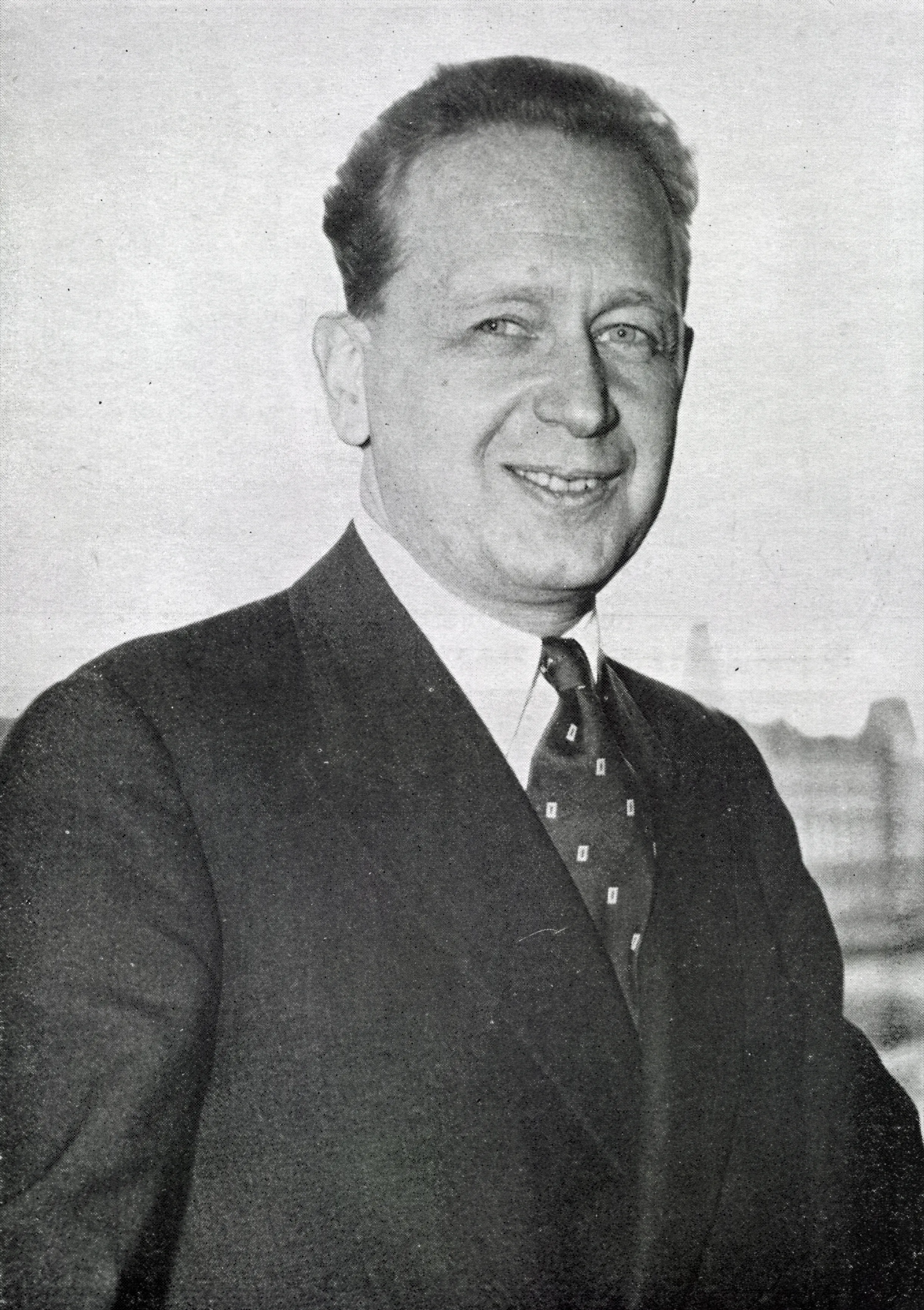
Dag Hammarskjold, a Swedish economist and diplomat, was the second Secretary-General of the United Nations, in office from April 1953 until his death. He would be awarded the 1961 Nobel Peace Prize posthumously, the only person ever to receive it after death. By September 1961 he was deeply engaged in the Congo Crisis, the violent aftermath of Congolese independence from Belgium, in which the mineral-rich province of Katanga, led by Moise Tshombe and backed by Western mining and mercenary interests, had seceded. United Nations peacekeeping forces were in armed confrontation with Katangese troops. Hammarskjold travelled to central Africa to broker a ceasefire and arranged to meet Tshombe at Ndola, across the border in Northern Rhodesia.
The aircraft was a Douglas DC-6B, a four-engine piston airliner named Albertina, Swedish registration SE-BDY, operated by Transair Sweden under charter to the United Nations and flown by a Swedish crew under Captain Per Hallonquist. On the night of 17 to 18 September 1961 it flew from Leopoldville, now Kinshasa, toward Ndola. To reduce the risk of interception over a war zone, the flight kept radio silence and an indirect routing for parts of the journey.
On the night approach to Ndola the aircraft descended and crashed into forest a short distance from the airport. A bright flash was observed at approximately 01:00 local time. Of the sixteen people aboard, fifteen died at or near the scene. The sole survivor, American UN security officer Harold Julien, was pulled from the wreckage alive and taken to hospital, where he died of his injuries several days later. All sixteen died. Hammarskjold’s body was found a short distance from the main wreckage and, unlike most of the others, was largely unburnt.
Three inquiries followed within roughly a year, and this is where the record begins to disagree with itself. A Rhodesian Board of Investigation sat from September to November 1961 under Lieutenant Colonel M.C.B. Barber and concluded the pilot had flown too low and struck trees. A Rhodesian and Federal Commission of Inquiry, run by the British-controlled Central African Federation and chaired by Sir John Clayden, again leaned to pilot error, reached by elimination of other suggested causes, a finding later criticized for discounting the testimony of African eyewitnesses. A United Nations Commission of Investigation, chaired by Rishikesh Shah of Nepal, returned an open verdict: it could not determine the cause and could not rule out sabotage or attack. The UN General Assembly recorded the open question in Resolution 1759 of 26 October 1962.
The case then lay largely dormant for decades, until journalistic and scholarly work, notably Susan Williams’s 2011 book Who Killed Hammarskjold?, revived it. An independent Hammarskjold Commission of four senior jurists, chaired by Sir Stephen Sedley, reported in September 2013 and recommended that the UN reopen its 1962 inquiry. The UN did. It appointed a panel of experts under Mohamed Chande Othman, a former Chief Justice of Tanzania, in 2015, then appointed Othman as an independent Eminent Person in 2017, with renewed mandates in 2019 and again in December 2022, the latter reporting through to a transmittal in 2024. The matter is not officially closed. The General Assembly remains seized of it, and the Secretary-General continues to call on member states to release records.
The evidence
The defining feature of this case at the level of evidence is that almost nothing in it points to a single cause. The physical record is consistent with more than one explanation. The strongest body of testimony is suggestive rather than conclusive. The one document trail that might settle the question is believed to exist and remains undisclosed. The honest work is in stating what each item can and cannot show.
The wreckage and the crash geometry. The aircraft came down in forest on a night approach, having descended below a safe altitude and made contact with trees. What this shows is a physical pattern consistent with controlled flight into terrain, which is the basis of the original pilot-error finding. Its limit is sharp. The same geometry is also consistent with a pilot reacting to an external threat or distraction in the final seconds, or with damage or fire aloft. The wreckage alone does not distinguish an accident from an attack. The modern UN process holds that the crash geometry no longer sustains a confident accident verdict.
Eyewitness testimony of a second aircraft and of fire before impact. Local witnesses near Ndola, including charcoal-burners, gave accounts of a second aircraft in the sky, or of SE-BDY being on fire or fired upon before it crashed. What this shows is a body of eyewitness evidence pointing to an external event. The 2015 UN panel assigned moderate value to nine such accounts, and the 2017 report found, according to the UN, a significant amount of eyewitness evidence describing more than one aircraft, a possible jet, fire before the crash, or the aircraft being fired upon. Its limit is the nature of the testimony itself: brief observations of a night event, much of it discounted by the original inquiries, a decision now itself criticized as a colonial-era failing. The testimony establishes that witnesses reported these things, not that the things are confirmed.
The survivor’s account. Harold Julien, the only person to come out of the wreckage alive, reportedly spoke of a series of explosions before the crash. What this shows is the single first-person account from aboard the aircraft, pointing to an in-flight event. Its limits are equally real. He was gravely injured, gave the account before dying several days later, and the original inquiry treated it as inconsistent and unreliable. It is suggestive, not dispositive.
The disputed forensic evidence. The original inquiry recorded that two Swedish bodyguards had multiple wounds described as bullet wounds, and concluded these were superficial and caused by ammunition exploding in the post-crash fire. This is a contested point at the centre of the attack-versus-accident dispute. A ballistics objection is on record: Major C.F. Westell is reported to have called it sheer nonsense that cartridges detonating in a fire could penetrate a human body, with tests said to show that heated cartridges lacked the velocity to penetrate even their own box. This is a conflict between the inquiry’s account and a later critic’s objection. It does not, by itself, establish that the men were shot. We report the conflict, not a conclusion.
Communications intercepts believed to exist. The popular account of the crash includes a radio intercept, attributed to a single named source, of a pilot’s commentary that has been rendered as words to the effect of having hit the aircraft and seeing it go down. That specific intercept is single-source and uncorroborated, and is presented here only as a claim, not as a confirmed recording. The load-bearing and documented point is narrower and stronger: the modern UN process found that member states probably hold relevant intercepts of communications related to that night, the strong inference being that signals-intelligence agencies were monitoring the airspace and may hold recordings or transcripts that have never been disclosed.
The official record’s disagreement with itself. The defining piece of evidence in this case is the sequence of official findings. Pilot error in 1961 and 1962. An open verdict from the UN in 1962. The independent Hammarskjold Commission’s 2013 finding, in its report, of persuasive evidence that the aircraft was subjected to some form of attack or threat. And the UN’s own appointed investigator concluding, in the reports transmitted from 2017 onward, that it is plausible that an external attack or threat caused the crash, that the accident verdict cannot be sustained, and that several member states likely still hold undisclosed records. No authority has ever closed the case. The most recent and best-resourced official view is that the cause is undetermined and an external attack cannot be excluded. The deliberate limit of that view is that “plausible” and “cannot be excluded” are short of proof: the modern process names no cause and no culprit.
The honest summary of the evidence is this. The physical record is consistent with both a low-approach accident and an external attack or distraction. A real body of eyewitness and survivor testimony points to a second aircraft, to fire, or to shots. A contested forensic point remains unresolved. And signals intelligence that might settle the question is believed to exist but has not been released. The strongest single piece of evidence is the official record’s own refusal to close.
The theories
Everything in this section is a hypothesis. None has been proven. The modern UN process names no cause and no culprit, and we name none here. The hypotheses are ordered roughly by how seriously the official record now treats them.
Controlled flight into terrain, or pilot error. The reading is that the crew, on a night approach after a long flight under radio silence, descended too low and flew an airworthy aircraft into trees, perhaps after an altimeter or approach-procedure error. In its favour are the crash geometry and the fact that the 1961 and 1962 Rhodesian and Federal inquiries adopted it by elimination of other causes. Against it stands the modern process: the UN’s appointed investigator has concluded this verdict cannot be sustained on the current evidence, the original inquiries are criticized for discounting African eyewitness testimony, and pilot error alone does not account for the second-aircraft and fire-before-impact accounts. This was the original official answer. It is now formally regarded by the UN-appointed investigator as unsafe, and it is not the accepted answer.
An external attack or shoot-down by another aircraft. The reading is that a second aircraft, often described as a jet and sometimes as a Fouga Magister, attacked SE-BDY, forced it down, or distracted the pilots at the critical moment of descent. In its favour are the eyewitness accounts, the 2013 Commission’s finding of persuasive evidence of some form of attack or threat, the 2017 finding that an external attack or threat is plausible (including the possibility that a distraction of only seconds during descent could have been fatal), the contested forensic evidence, and the belief that intercepts exist. Against it is the simple fact that no wreckage analysis, recording, or document has ever proven an attack. The UN’s word is “plausible,” not “established.” This is the hypothesis the modern process treats most seriously, and it remains explicitly short of proof.
Two named-suspect strands attach to this theory, and both must be handled as what they are: attributed and unproven. The first is an account given to the French diplomat Claude de Kemoularia around 1967, in which a pilot referred to only as “Beukels” claimed he had been ordered to intercept SE-BDY and inadvertently brought it down. The identity of “Beukels” was never verified, the original notes are not traceable, and later investigators rated the account’s probative value only as weak. It is a second-hand, uncorroborated claim. The second is an allegation against Jan van Risseghem, a Belgian mercenary pilot who died in 2007, named in a declassified diplomatic cable and a documentary as the alleged pilot of a Katangese aircraft. That allegation is disputed and uncorroborated: his flight logs and a Belgian government report place him away from Katanga that night, and while critics have alleged the logs were doctored, they have produced no proof. We do not assert that any named person attacked the aircraft.
Sabotage. The reading is that a bomb or tampering aboard SE-BDY caused an in-flight event. In its favour are the survivor’s report of explosions and, by some readings, the separation of Hammarskjold’s body from the main wreck. Against it is that sabotage has never been established. The document trail most often cited for it, the so-called SAIMR or Operation Celeste papers that surfaced through South Africa’s Truth and Reconciliation Commission in 1998 and purport to describe a plot, is of disputed authenticity; British officials suggested it may be Soviet-era forgery or disinformation. We flag that disputed authenticity wherever the material appears. The UN process lists sabotage among the hypotheses that remain available but unproven. It is a live possibility resting on a document trail widely considered dubious.
A hijack or forced diversion gone wrong. The reading is that an attempt to intercept the aircraft and force it to divert ended in the crash without a deliberate kill. The “Beukels” account sits in this register, and such a scenario would reconcile a second aircraft with the absence of a clean shoot-down. It rests on the same weak, uncorroborated sourcing as the attack theory and has no independent confirmation. It is attributed speculation dependent on weak sources.
The Western-intelligence cover-up framing. This is the register the case is best known for, and it requires the sharpest distinction in the piece. The documented part is real: the modern UN process believes several states hold undisclosed records and has formally urged their release, and there have been decades of declassification disputes. Harry Truman is reported to have said, in the days after the crash, that Hammarskjold was on the point of getting something done “when they killed him,” though that remark is not confirmed to a contemporaneous source and reaches us through a much later newspaper account, so we present it as attributed and of uncertain provenance, not as established fact. What the record does not support is the leap from “records are withheld” to “a proven assassination by a named agency.” The UN’s actual position is the narrower one: that records are likely being withheld and should be released, and that the cause is undetermined. We present the documented part as fact and decline to endorse the proven-conspiracy version.
What remains unknown
The honest residue of this case is large, and it is officially sanctioned. A chartered airliner carrying the Secretary-General of the United Nations crashed on a night approach in a war zone in 1961, and sixteen people died. The colonial-era inquiries called it pilot error. The UN of the day returned an open verdict. And in our own time an independent commission of jurists and the UN’s own appointed investigator have concluded that the accident verdict cannot be sustained, that an external attack or threat is plausible and cannot be excluded, alongside sabotage and human error which also cannot be excluded, and that the cause cannot be determined on the evidence states have been willing to disclose.
So we will not tell you the crew flew an airworthy aircraft into the ground, because the UN’s own investigator has found that verdict cannot be sustained. We will not tell you a second aircraft shot SE-BDY out of the sky, because the modern process calls that plausible, not proven, and names no pilot. We will not tell you it was sabotage, because the document trail for it is of disputed authenticity and nothing has established a device. And we will not tell you Western intelligence murdered the Secretary-General, because the record supports withheld files and an open question, not a proven conspiracy.
The single most concrete open question is documentary. Several governments, among them states the UN process has named as likely to hold relevant material, including Belgium, Britain, France, Germany, South Africa, the United States, and Sweden in part, have been urged to release security, intelligence, and defence records and intercepts that have never been disclosed. They are named as states asked to open their files, not as accused parties. The answer, if it exists, may sit in those archives.
What we can tell you is the rarest thing this file can offer. This is not a solved murder and not a proven accident. It is a sixty-four-year-old death that the United Nations has formally reopened and, on the record, declines to call closed: an authority that has stated it cannot sustain the original verdict, that an external attack remains a plausible and unexcluded cause, and that it still does not know what happened, while it presses member states for the records it believes someone is still holding. The file is open, and the authorities said so themselves.
Sources
Primary / official
- UN, Report of the Independent Appointed Eminent Person (Mohamed Chande Othman), 2017, document A/71/1042
- UN Secretary-General, Statement on the report of the Eminent Person relating to the death of Dag Hammarskjold (25 October 2017)
- UN, Secretary-General transmits report of the Eminent Person (2024), SGSM/22413
- The Hammarskjold Commission (commission of jurists), report of 9 September 2013, official inquiry site
Secondary / contextual
- UN News, “Plausible that ‘attack or threat’ led to crash that killed former UN chief Hammarskjold - new report” (2017)
- The Dag Hammarskjold Foundation, “Crash investigations and the death of Dag Hammarskjold”
- United Nations Office at Geneva, “Mystery still surrounds death of revered UN chief Hammarskjold, 63 years after tragic plane crash” (2024)
- History.com, “UN Leader Dag Hammarskjold Died in Mysterious Circumstances in 1961. What Really Happened?”
- The New York Review of Books, Stephen Sedley, “The Hammarskjold Mystery” (5 December 2013)
- PassBlue, “Stalling the UN Report on Dag Hammarskjold’s Death Is Regrettable” (17 September 2019)
- Al Jazeera, “Inquiry urged into 1961 death of UN chief” (9 September 2013)
- Wikipedia, “1961 Ndola Transair Sweden Douglas DC-6 crash”
- Wikipedia, “Dag Hammarskjold”
- fabryhistory.com, “DC-6B SE-BDY - Vlado”