Disappearances Case file
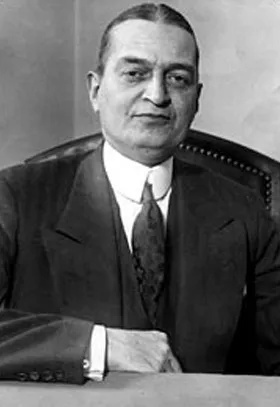
The Missingest Man in New York: Justice Joseph Force Crater, 6 August 1930
A sitting New York Supreme Court justice walked out of a Manhattan chophouse on a Wednesday evening in August 1930 and was never positively seen again. A grand jury, the NYPD, the City Bar, and the Seabury Commission worked the surrounding ground. None reached a determination. Ninety-five years on, the only formal finding remains a Surrogate's Court declaration of death.
- Case type
- Disappearance
- Status
- Unexplained
- Event date
- August 6, 1930
- Location
- New York City; last positive sighting outside Billy Haas's Chophouse, 332 West 45th Street, Manhattan - United States
- Evidence
-
- Official record
- Testimonial
The open question What happened to Justice Joseph Force Crater between the moment he stepped into a taxicab on West 45th Street on the evening of 6 August 1930 and the absence of any subsequently confirmed positive sighting in the ninety-five years since?
On the evening of Wednesday, 6 August 1930, a sitting justice of the New York Supreme Court finished dinner at a chophouse on West 45th Street, stepped into a taxicab between roughly nine ten and nine thirty, and rode out of the documented record. He had cashed checks for $5,150 that morning, spent two hours in chambers going through files, and bought a ticket to that night’s Belasco Theatre comedy, never used. His two dinner companions watched the cab pull away. No credible account of where it went has ever surfaced.
Justice Joseph Force Crater had been on the bench less than four months. Governor Franklin D. Roosevelt had appointed him on 8 April 1930 to the New York Supreme Court, First Judicial District. The Seabury Commission would establish that he had paid Tammany Hall one year’s salary, $22,500, for the seat. The institutional response was unusually thorough: an October 1930 grand jury heard ninety-five witnesses; the City Bar ran its own inquiry; the Seabury Commission worked the corruption ground through 1931 and 1932; the NYPD file stayed open for forty-nine years. None reached a determination.
The Surrogate’s Court declared him legally dead on 6 June 1939 on his widow’s petition. The NYPD closed the file as unresolved in 1979. In August 2005 it was briefly reopened on a posthumous letter from a Queens widow, Stella Ferrucci-Good, alleging that her late husband had witnessed a Tammany-ordered killing and a burial beneath the Coney Island boardwalk. The alleged site had been razed in the 1950s for the present New York Aquarium. The 2005 review produced no remains. The file closed again.
This is the case of the case. We keep the three layers separate: what is in the record, what the evidence shows, and what is only hypothesis.
The documented account
Crater was born on 5 January 1889 in Easton, Pennsylvania, graduated from Lafayette College in 1910 and from Columbia University Law School, and entered Democratic politics in Manhattan through the Cayuga Democratic Club under district leader Martin J. Healy, serving as secretary to State Senator Robert F. Wagner.
In 1929 he was appointed receiver in the bankruptcy of the Libby Hotel at Christie and Delancey Streets, sold at auction to the American Bond and Mortgage Company for $75,000 with $1.5 million in debt assumed. The Seabury Commission later scrutinised the transaction.
On 8 April 1930, Governor Roosevelt appointed Crater to the New York Supreme Court at a salary of $22,500. The Seabury Commission subsequently established that he had paid Tammany Hall one year’s salary for the appointment. Crater had married Stella Mance Wheeler in 1917; they had no children. Their Manhattan residence was at 40 Fifth Avenue. Summers were spent at a cottage on Great Pond, Belgrade Lakes, Maine.
Crater was at the Maine cottage in late July 1930 when he received a telephone call. He told Stella he had to return to New York. Her later memoir records him saying he was going “to straighten those fellows out” or a close variant; the wife-memoir bias caveat applies. He returned briefly to Maine on 1 August and travelled back to New York on 3 August.
On 5 August his court attendant Joseph Mara helped move locked briefcases and files from chambers to the apartment. On 6 August Crater spent two hours at chambers going through files; some accounts state he destroyed documents. He had Mara cash two checks totalling $5,150; the often-repeated attribution to a particular Manhattan trust company is not corroborated. Mara moved a second set of briefcases at midday. In the afternoon Crater bought a single ticket to that evening’s Dancing Partner at the Belasco Theatre.
That evening Crater dined at Billy Haas’s Chophouse at 332 West 45th Street with William Klein, attorney for the Shubert theatrical interests, and Sarah Ritzi, who performed under the stage name Sally Lou Ritz. The party left between roughly nine ten and nine thirty, Klein’s later testimony placing it closer to nine thirty. They watched Crater step into a taxicab and walked off toward Broadway. The taxi’s destination has never been established.
Stella expected her husband at the cottage within days; when he did not arrive she wired friends. The court was in summer recess and the absence was not initially flagged. The City Bar initiated a quiet inquiry through Justice Frederick E. Crane. The case did not enter the public record until 3 September 1930, twenty-eight days after the dinner; Simon H. Rifkind, later a federal judge, urged the disclosure.
The October 1930 New York County grand jury heard ninety-five witnesses across nine hundred and seventy-five pages of testimony, returning in 1931 with the finding that the evidence was insufficient to determine whether Crater was alive or dead, voluntary or victim of a crime.
On 19 or 20 January 1931, Stella reported finding a manila envelope in a bureau drawer: $6,690 in cash, three insurance policies, a handwritten “Confidential” debtors list noting a large sum owed on the Libby Hotel matter, and a brief note in his hand variously transcribed as “I am very weary. Joe” or “Am very weary. Love, Joe.” NYPD had searched the apartment multiple times in the prior months; the discovery was contested on that ground.
In 1931 and 1932 the Seabury Commission investigated corruption in the magistrates’ courts and Tammany Hall. Its final report did not address the disappearance but established the price Crater had paid for his judgeship and identified the Libby Hotel receivership as a vehicle that had enriched him.
On 23 April 1938, Stella Crater married Carl Kunz in Elkton, Maryland. On 6 June 1939 the Surrogate’s Court declared Joseph Force Crater legally dead on her petition, and she collected insurance of approximately $20,561. She died in September 1969 at age seventy, maintaining throughout her life that her husband had been killed. The NYPD file was closed unresolved in 1979.
The 2005 reopening and the Ferrucci-Good letter
Stella Ferrucci-Good of Queens died in August 2005 at age ninety-one. Her granddaughter found a sealed envelope marked “Do not open until my death” in a metal box at her home. The letter alleged that Stella’s late husband, Robert Good, had told her he was a witness to Crater’s killing. It named NYPD officer Charles Burns, identified in subsequent press as a bodyguard for the Murder, Inc. enforcer Abe Reles, and his brother Frank Burns, a cab driver, as the men who killed Crater. By the letter’s account, Frank Burns picked Crater up after dinner, collected accomplices, and buried him under the Coney Island boardwalk near West 8th Street, Brooklyn, on Tammany orders. Robert Good’s own occupation is given variably across press accounts as cab driver, Parks Department supervisor and lifeguard, or NYPD detective.
NYPD reopened the case. The West 8th Street area had been razed in the mid-1950s for the New York Aquarium; the 2005 inquiry was a documentary review of construction-era records, not a fresh excavation, and no skeletal remains had ever been reported there. The letter is hearsay of hearsay: Ferrucci-Good writing what her late husband had told her about what he claimed to have witnessed in 1930. The case closed again. The Burns brothers had been dead for decades by 2005, and neither was ever charged or named in any contemporaneous 1930 or 1931 record.
A correction on Sarah Ritzi
A claim recurring in popular retellings has Crater’s dinner companion Sally Lou Ritz herself vanishing, with a curse framing built around it. The record does not support it. Sarah Ritzi went out of public view briefly after the August 1930 press named her, was traced within days to her parents’ home in Youngstown, Ohio, later married under another name, and died peacefully in 2000. The curse framing should not run.
The evidence
The record is a few hours of one Wednesday in August, a body of official paper that followed, and a single posthumous letter eighty-five years on.
Klein and Ritzi’s grand jury testimony. The most important witness statements in the case. Both placed Crater outside Billy Haas’s in apparently ordinary spirits, stepping into a taxicab between nine ten and nine thirty, Klein’s figure closer to nine thirty. The last positive sighting. Neither was in the cab.
The October 1930 grand jury record. Ninety-five witnesses, nine hundred and seventy-five pages, within two months of the disappearance. The finding is load-bearing: insufficient evidence to determine whether Crater was alive or dead, voluntary or victim.
The Seabury Commission record. Samuel Seabury’s 1931 to 1932 investigation of the magistrates’ courts and Tammany Hall did not address the disappearance. It established the Tammany payment for the judgeship and the structure of the Libby Hotel receivership: the financial and political ground on which several theories rest, not evidence about his fate.
The January 1931 manila envelope. $6,690 in cash, three insurance policies, a “Confidential” debtors list, and a handwritten note, reported by Stella in a bureau drawer six months in. If the envelope is what she said it was, it shows a small personal-financial archive and a note read as both farewell and exhaustion. The contested discovery: NYPD had searched the apartment multiple times and the envelope had not been seen.
The Surrogate’s Court declaration of death and Stella Crater’s 1961 memoir. The 6 June 1939 declaration is the single formal institutional finding in ninety-five years, and not a finding about manner, place, or date. The Empty Robe, written with Oscar Fraley three decades on by a widow who maintained throughout her life that her husband had been killed, is the source of the “straighten those fellows out” line; the wife-memoir bias caveat applies.
Modern scholarship and the contemporaneous press. Richard J. Tofel’s Vanishing Point (2004) is the standard modern treatment. Robert Riegel’s Finding Judge Crater (Syracuse University Press) draws on NYPD case files and overlooked court records. New York Times reporting from 3 September 1930 onward, with the Herald Tribune, World, Daily News, and Daily Mirror through 1931, and later coverage of the 1979 closure and 2005 reopening.
The Ferrucci-Good letter and the 2005 NYPD review. A sealed envelope opened in August 2005, naming two long-deceased men, by a woman writing third-hand about a scene she had not witnessed. The 2005 review was documentary, against construction-era records of West 8th Street where the boardwalk had been razed in the 1950s; no remains had ever been reported there. The chain of attribution is hearsay of hearsay, after every other named person was dead. Documented as a letter, not as a witness statement.
The theories
Everything below is hypothesis. Anyone named as a possible perpetrator is named only because the documentary or modern-investigative record names them, never as a finding by this publication.
Voluntary disappearance. Crater was carrying $5,150 in fresh cash, had spent the prior day clearing files, and bought a theatre ticket on the afternoon of 6 August. His position was about to come under serious scrutiny. Against the theory stands the $6,690 in the manila envelope six months later, hard to reconcile with a calculated departure; the abandoned salary and insurance; and the absence of any confirmed sighting in ninety-five years, when a new life under another name tended in that period to surface at a death certificate. The theory the absence of remains positively favours, and still speculation.
Killed to prevent his testimony before a coming Tammany inquiry. Crater had paid Tammany for his judgeship and profited from the Libby Hotel receivership, both of which came under Seabury scrutiny in 1931 and 1932. Against the theory stands what the Commission did: it proceeded without Crater and reached findings against named Tammany figures. The record does not name a specific person who would have ordered the killing.
Killed by the Burns brothers and buried beneath the Coney Island boardwalk. The Ferrucci-Good allegation. The only theory to name specific alleged perpetrators, and the one with the weakest chain of attribution: hearsay of hearsay, eighty-five years on, naming two men long deceased and never named in any contemporaneous record. The 2005 review found nothing because the site had been razed in the 1950s. Charles Burns and Frank Burns are named here only because the record names them, and they are not implicated by this publication.
Killed in connection with organised crime over a financial dispute. Period press and modern review literature surface names from the organised-crime fringe of Crater’s milieu, including Vincent Rao and “Legs” Diamond. No contemporaneous record links any of them to the disappearance; they are named here only as named in literature.
Natural death with the body disposed of by an interested party. A minority position: heart attack or stroke in or shortly after the cab, those around him handling the body privately. It rests on no positive evidence.
None is proven. Each describes a space the evidence leaves empty.
What remains unknown
Ninety-five years on, the only formal institutional finding is the Surrogate’s Court declaration of death of 6 June 1939. The grand jury could not reach one. The Seabury Commission did not address the disappearance. The NYPD file stayed open forty-nine years and closed unresolved in 1979. The August 2005 reopening produced no remains because the alleged site had been razed half a century earlier. The file closed again.
What is documented is narrower. A sitting justice of the New York Supreme Court stepped into a taxicab on West 45th Street on the evening of 6 August 1930 and did not arrive anywhere subsequently confirmed. He had paid Tammany a year’s salary for his seat, profited from a receivership about to come under serious scrutiny, spent his last documented day clearing files and cashing checks, and bought a theatre ticket he never used. Twenty-eight days passed before the disappearance entered the public record; by then the trail was already cold.
We will not tell you he walked away to a new life, because no new life was ever found and the manila envelope is hard to reconcile with one. We will not tell you he was killed to silence his testimony, because the Seabury Commission proceeded without him and no record names the person who would have ordered the killing. We will not tell you he was killed by the Burns brothers and buried beneath the Coney Island boardwalk, because the basis is a posthumous letter writing third-hand about a scene the writer never saw, the alleged site had been razed before the claim was public, and the men named had been dead for decades and never tied to the case in any contemporaneous record. Charles Burns, Frank Burns, Vincent Rao, and “Legs” Diamond are not implicated by this publication. We will not tell you what happened to him, because the record does not.
The phrase “to pull a Crater” entered American English in the years after. The case itself, set against its record, is an open question about a man who is gone.
Sources
Primary / primary-adjacent
- The New York Times, contemporaneous coverage from 3 September 1930 onward (TimesMachine archive)
- Joseph Force Crater, The Charley Project
- Joseph Force Crater, Wikipedia
- Belgrade Historical Society, “Judge Crater”
The October 1930 grand jury record, the Seabury Commission’s 1932 final report, the Surrogate’s Court declaration of death, the NYPD missing-persons file, and the Ferrucci-Good letter as quoted in the August 2005 New York Times and Daily News were not consulted in their original form for this piece.
Secondary / contextual
- Richard J. Tofel, Vanishing Point: The Disappearance of Judge Crater, and the New York He Left Behind, Ivan R. Dee, 2004
- Robert Riegel, Finding Judge Crater: A Life and Phenomenal Disappearance in Jazz Age New York, Syracuse University Press
- Stella Crater with Oscar Fraley, The Empty Robe: The Story and Trial of the Continuing Mystery of Judge Crater, Doubleday, 1961 (wife-memoir bias caveat applies)
- “Today in History: The Mysterious Disappearance of Joseph Force Crater,” Untapped New York
- “Judge Crater: The ‘Missingest Man’ in New York City,” Historic Mysteries
- HISTORY, “Judge Joseph Force Crater becomes the ‘missingest man’ in New York”
- EBSCO Research Starters, “Crater disappearance”
- Ariel Lawhon, “Case Closed: the True Story of a Happy Ending” (on Sarah Ritzi)