Aviation Mysteries Case file
L'Oiseau Blanc, 8 May 1927: the flight that vanished twelve days before Lindbergh
A white French biplane crossed the Étretat coast at about 0648 on a Sunday morning and headed out over the North Atlantic. Ninety-nine years, four serious modern investigations, and a small file of unidentified wreckage later, no one has produced the aircraft.
- Case type
- Aviation
- Status
- Unexplained
- Event date
- May 8, 1927
- Location
- Trans-Atlantic, attempted Paris (Le Bourget) to New York; last positive observation Étretat, Normandy, France - North Atlantic Ocean - France
- Evidence
-
- Testimonial
- Physical
- Official record
The open question What happened to L'Oiseau Blanc between the last positive observation crossing the Étretat coast at approximately 0648 Paris time on 8 May 1927 and the expected arrival at New York that did not occur, and is the aircraft on the Atlantic floor, on the Newfoundland coast, in the Maine wilderness, or somewhere else entirely?
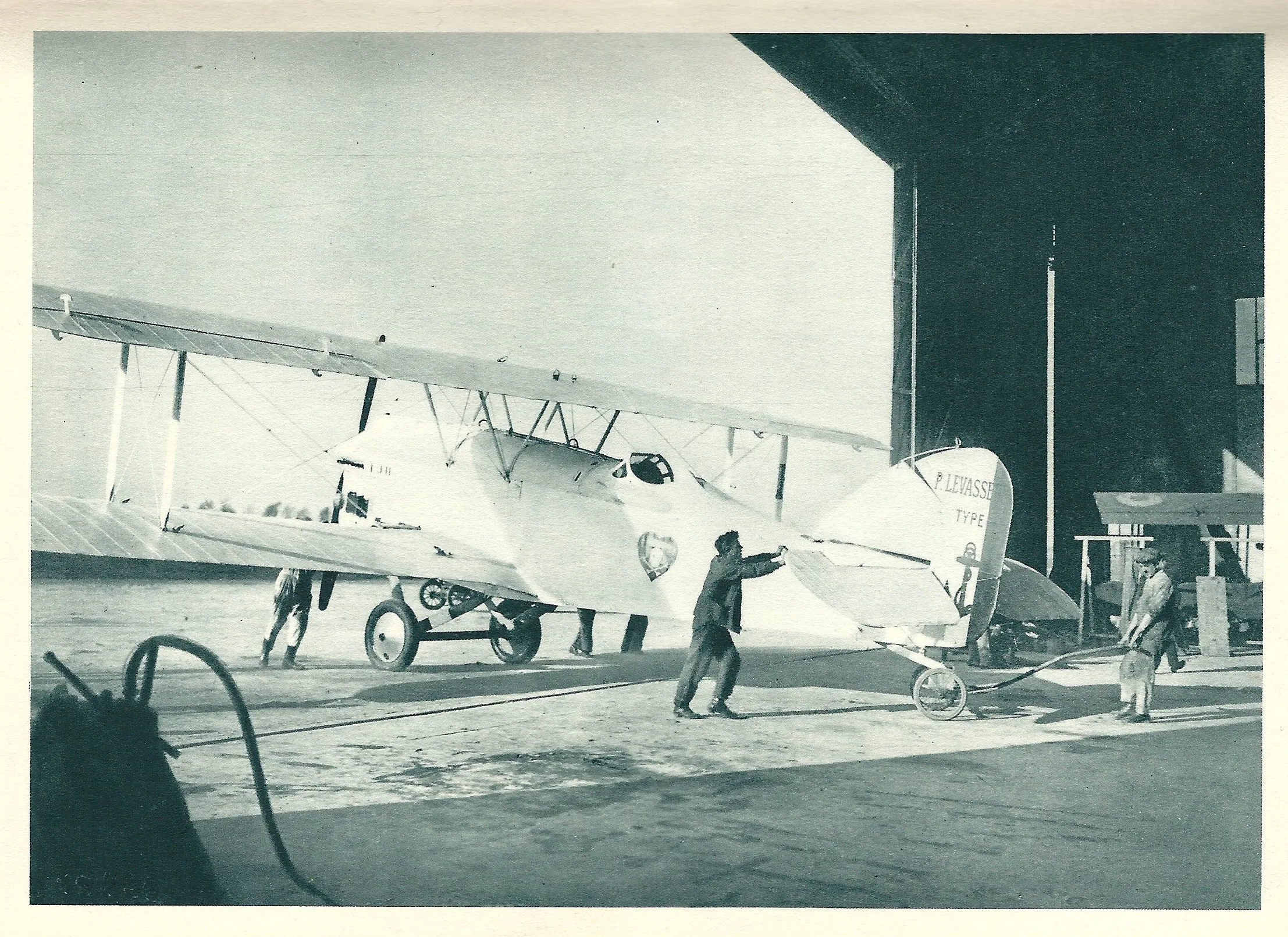
A large crowd was at Le Bourget aerodrome on the morning of Sunday 8 May 1927 to watch a single-engine French biplane, painted white and named L’Oiseau Blanc, attempt the first nonstop crossing from Paris to New York. The aircraft lifted off at about 0517 Paris time. Its undercarriage, designed to be dropped after takeoff, was jettisoned shortly afterward and recovered on the airfield. About an hour and a half later, at approximately 0648, the aircraft was seen at low altitude crossing the Normandy coast at Étretat, heading out over the English Channel toward Ireland and the Atlantic. It was the last positive observation that the documentary record allows.
What followed, through the rest of 8 May and into 9 May, was a scatter of contested reports from the Irish coast, from Newfoundland, from Nova Scotia, and from the Maine wilderness, none of which has ever been resolved into a confirmed sighting. New York newspapers initially carried stories that the aircraft had been seen off the American coast, or had even landed. By the morning of 10 May 1927 those reports were retracted in both Paris and New York, and the loss of the pilot, Charles Nungesser, and the navigator, François Coli, was understood.
Twelve days later, on 20 May 1927, Charles Lindbergh took off in the opposite direction from Roosevelt Field on Long Island, and on the evening of 21 May 1927 he landed at Le Bourget in the Spirit of St. Louis. His first reported question on landing was about news of Nungesser and Coli. There was none.
Ninety-nine years on, that has not changed. Four serious investigative efforts have been brought to bear on the case since 1984: TIGHAR’s Project Midnight Ghost in central Maine and later Newfoundland, three NUMA expeditions led from Clive Cussler’s organization, a French government re-examination concluded in 1984, and the continuing archival work of the French researcher Bernard Decré with the US National Archives. Two pieces of unidentified wreckage are in the documentary record from the summer of 1927. No confirmed wreck of L’Oiseau Blanc exists.
The aircraft and the men
The Levasseur PL.8 was a single-engine, two-seat, long-distance biplane developed by the Société Pierre Levasseur Aéronautique from the PL.4, a carrier-based reconnaissance type designed for the French Aéronavale and the carrier Béarn. Two airframes were built. The first, PL.8-01, was named L’Oiseau Blanc and painted white. It was shipped from the Levasseur factory in Paris in April 1927 for proving tests and was committed to the transatlantic attempt the following month.
Construction was conventional wood and fabric on a reinforced fuselage. Two design features were specific to the over-water mission. The underside of the fuselage was shaped like a boat and made watertight, to allow a water landing at the New York end. The undercarriage was designed to be jettisoned after takeoff to reduce weight and drag, and was duly dropped on the morning of 8 May.
The powerplant was a Lorraine-Dietrich 12Ed “broad arrow” W-12, rated at approximately 460 hp. Fuel capacity was 4,025 litres across three tanks, with two additional tanks aft of the firewall, giving a stated endurance of around forty hours. The aircraft carried no radio. Navigation was by celestial methods, Coli’s specialty, and dead reckoning.
Charles Nungesser, born in Paris on 15 March 1892, was 35 years old that morning. He had been a mechanic and a racing driver in South America before the war and had learned to fly on a friend’s Blériot. He enlisted in 1914 in the cavalry, transferred to the Service Aéronautique, and served with the bombing escadrille VB106 and then the fighter escadrille N.65. By the armistice he had 43 confirmed aerial victories, the third-highest French total of the First World War, behind René Fonck and Georges Guynemer. His personal insignia, painted on his aircraft, was a black heart enclosing a skull and crossbones, a coffin, and two candlesticks; it earned him the nickname “the Knight of Death,” and is documented in the Smithsonian National Air and Space Museum’s record of First World War airplane insignia. His medical file from the war included a fractured skull, multiple jaw and limb fractures, internal injuries, and an artificial palate. After the war he tried to establish a flying school and appeared in the 1925 American film The Sky Raider.
François Coli, born in Marseille on 5 June 1881 to a Corsican seafaring family, was 45. He had trained as a merchant captain. He entered the French Army as a private in 1914, was commissioned in 1915, was declared unfit for the infantry on account of multiple wounds, transferred to the French Air Service, and was awarded his pilot’s brevet in March 1916. He joined Escadrille N.62 in late 1916 and took command of it in February 1917. He lost an eye in a crash in March 1918 and continued to lead the Escadrille des Coqs after his recovery, leaving the squadron in August 1918. Postwar, his record flights are documented: on 26 January 1919, the first double Mediterranean crossing with Henri Roget; on 24 May 1919, a Paris to Port Lyautey distance flight of 2,200 km, with Coli injured in the landing crash; further Mediterranean flights in 1920 with Joseph Sadi-Lecointe. From 1923 he was planning a nonstop transatlantic attempt with the French ace Paul Tarascon. When Tarascon was injured in a crash in late 1926, the project transferred to Nungesser.
The flight
The Orteig Prize, $25,000 for the first nonstop heavier-than-air flight in either direction between New York and Paris, had been offered by Raymond Orteig, a French-born New York hotelier, in 1919. By the spring of 1927 the field included Nungesser and Coli on the Paris-to-New York leg, Lindbergh going solo from New York, and the American teams of Richard Byrd and Clarence Chamberlin. Two earlier attempts had ended in takeoff crashes in September 1926 and April 1927.
The flight plan filed for L’Oiseau Blanc was a great-circle track from Le Bourget across the Channel, over southwestern England, Ireland, the North Atlantic to Newfoundland, then south over Nova Scotia and the New England coast to Boston and on to a water landing at New York Harbour. Expected time of arrival was the afternoon of 9 May, approximately forty hours after takeoff.
Takeoff at Le Bourget on Sunday 8 May 1927 was at approximately 0517 Paris time. TIGHAR’s own project introduction gives 0518; modern secondary sources converge on 0517, a one-minute difference of no operational consequence. The aircraft was reported to have used an exceptionally long takeoff run because of the fuel load. The undercarriage was jettisoned shortly after liftoff, as designed, and was recovered on the ground at Le Bourget.
A formation of military aircraft, camera planes, and a Levasseur company aircraft escorted L’Oiseau Blanc from Le Bourget toward the Channel coast and turned back near the shore. At approximately 0648 Paris time the aircraft crossed the Normandy coast at Étretat, at low altitude, in good weather, heading out over the Channel. This is the last positive observation in the documentary record.
What follows, in the record, are two clusters of contested reports. The first, from later that morning, placed the aircraft over the Irish Atlantic coast around County Clare; one summary records an observer with a telescope who was said to have confirmed French markings on an aircraft at about 1,000 m altitude, and another that the French Embassy in Ireland confirmed a Lismore-to-Carrigaholt crossing. The second cluster, from late 8 May and into 9 May, came from the North American shore: from Harbour Grace in Newfoundland, from Nova Scotia, from the New England coast, and from the central Maine wilderness around Round Lake. Several Newfoundland press reports were retracted within days.
The New York press of 9 May 1927 ran initial stories that the aircraft had been seen off the New York coast or had arrived; those stories were retracted within twenty-four hours. By the morning of 10 May the loss was understood. President Calvin Coolidge sent a message of condolence to France. Lindbergh flew on 20-21 May. A monument inscribed “À ceux qui tentèrent et celui qui accomplit” (“To those who tried and to the one who succeeded”) was inaugurated at Le Bourget on 8 May 1928, the first anniversary of the loss.
The evidence
The 1927 international response is in the documentary record. The French Navy was reported to have scoured the planned route; the Aéro-Club de France and the French Air Ministry coordinated the French side. The Pierre Levasseur company supplied the airframe technical record. The United States Coast Guard led the eastern-seaboard search-and-rescue response. The US Navy was involved, with one of Floyd Bennett’s flights conducting a nine-day search. The Canadian government dispatched two aircraft.
Two physical recoveries from the Coast Guard’s own records are the documentary core of the modern North American hypothesis, and both are documented in the US National Archives through the work of Bernard Decré with archivist Mark Mollan. The first, on 19-20 May 1927 in Napeague Bay near Montauk, New York, was an “aileron of plane in Napeague Bay off Fort Pond Bay,” logged by Coast Guard telegram of 20 May 1927. The second, on 18 August 1927 off Norfolk, Virginia, was retrieved by the SS Gulfpoint: “piece of wreckage to be part of airplane wing white in color.” A Coast Guard telegram in National Archives custody noted that “this may be the wreck of the Nungesser Coli airplane.” Neither item was conclusively identified at the time. Both are in the file, and neither has been positively reconciled with the PL.8 construction in the intervening century. The 4 June 2013 blog post by David S. Ferriero, then Archivist of the United States, summarises both.
The Maine hypothesis rests on a single witness account, published more than half a century after the events. Anson Berry, a Maine guide and recluse who lived near Machias in Washington County and who died in 1936, was said in Hansen’s 1980 account to have heard, on the afternoon of 9 May 1927, a sputtering aircraft engine pass low over his isolated camp at Round Lake, descend behind a wooded ridge, and stop with what he described as a faint, ripping crash. Cloud and fog prevented him from seeing the aircraft. The account was first published in detail by the freelance writer Gunnar Hansen, of Northeast Harbor, Maine, in an article titled “The Unfinished Flight of the White Bird” in Yankee magazine, June 1980. The Hansen article, reproduced on the TIGHAR website, is the proximate cause of the modern Maine investigation.
The International Group for Historic Aircraft Recovery, founded in 1985 by Richard E. Gillespie, began its work on the case as Project Midnight Ghost in 1984. TIGHAR’s own project introduction records that the organization “assembled all of the available factual data on the flight, interviewed dozens of Maine residents and mounted a total of twenty wilderness search expeditions staffed by more than 200 volunteers,” and that it interviewed “thirty hunters who reported finding a large airplane engine,” but found “no hard evidence that such a crash had ever occurred.” Various alleged discoveries were “checked out and found to be groundless.” By 1992 the project’s primary geographic focus had shifted from central Maine to Newfoundland’s Avalon Peninsula, where local folklore likewise pointed to an aircraft crash at Gull Pond.
NUMA, the National Underwater and Marine Agency associated with the novelist Clive Cussler, launched the first of three expeditions in October 1984. Their work, summarised in NUMA’s own account and in the chapter on the White Bird in Cussler and Craig Dirgo’s The Sea Hunters II (G.P. Putnam’s Sons, 2002), covered Newfoundland, Nova Scotia, coastal Maine, and bog terrain near Bangor, Maine, with attention to the southern slope of the Round Hills near Round Lake. Methods combined ground reconnaissance with consultation with the psychic Ingo Swann, whose projections were used to direct search. None of the three expeditions found an aircraft. Cussler’s own published conclusion was that the aircraft had either crashed south of the searched area or “went down in an impenetrable bog and chances of it ever being found are quite nil.”
The French government re-examined the case in 1984 and concluded that it was possible the aircraft had reached Newfoundland. In 2011 the Wall Street Journal reported on the work of an unofficial French team focused on a Canadian coastal crash; the work associated with Bernard Decré has continued in that direction from the 2010s onward, drawing on US Coast Guard logbooks, dispatches, and telegrams held by the National Archives.
The original Étretat monument was erected on 8 May 1928 on the cliff above the Chapelle Notre-Dame de la Garde. It was destroyed by German occupying forces during the Second World War (sources give 1942 or 1944). The present monument, a 24 m concrete spire inclined at 60° and pointed at the sky, was erected on the same site, on the Falaise d’Amont, in 1962 or 1963 depending on source.
Hypotheses and open questions
Five readings of the disappearance are on the record. None is asserted as fact.
The first is that L’Oiseau Blanc ditched in the North Atlantic. The supporting evidence is the absence of positively identified wreckage on land, the documented heading at Étretat, and the planned great-circle route. The longstanding French government position has been that the aircraft went down at sea. The constraint is that 99 years and several modern surveys, including NUMA’s, have not located the aircraft on the Atlantic floor along the projected track.
The second is that the aircraft reached the Newfoundland coast and was lost there. The supporting evidence is the cluster of contemporary shoreline reports from Newfoundland and the Cape Breton and Nova Scotia coast, the planned approach corridor over Newfoundland, TIGHAR’s 1992 shift of focus to the Avalon Peninsula, and the 1984 French government review’s conclusion that Newfoundland arrival was possible. The constraints are that no wreckage has been positively identified, and that the witness reports come from a period when the loss was front-page news.
The third is that the aircraft crashed in the central Maine wilderness. The supporting evidence is the Anson Berry account at Round Lake as published by Hansen in 1980, and subsequent Maine resident interviews collected by TIGHAR through the 1980s. The constraints are that TIGHAR’s twenty wilderness expeditions and more than 200 volunteers across multiple seasons did not produce a confirmed wreck site, that TIGHAR’s own published summary describes follow-up of alleged finds as “groundless,” and that the Maine route requires the aircraft to have continued north past New York.
The fourth is that the aircraft came down elsewhere on the North American shore, in the Canadian Maritimes, the Gulf of Saint Lawrence, or along the mid-Atlantic United States coast. The supporting evidence is the August 1927 Coast Guard recovery off Norfolk, the 19 May 1927 aileron recovery in Napeague Bay, and the Coast Guard’s own telegrammed suggestion that the Norfolk fragment might be from the missing aircraft. The constraint is that neither piece was reconciled with PL.8 construction at the time, and that neither has been positively identified in the century since.
The fifth is mid-flight catastrophic failure, engine or structural. There is no positive evidence for any specific failure mode. It is recorded for completeness.
What remains unknown
Nothing in the file resolves which of those readings, if any, is correct. The aircraft is not positively located on any seabed, on any shore, or in any forest. The Coast Guard’s Napeague Bay aileron and the SS Gulfpoint fragment are in the National Archives. The Hansen account from Round Lake is in Yankee magazine’s June 1980 issue. TIGHAR’s twenty expeditions are documented as having found nothing identifiable. NUMA’s three expeditions are documented likewise. The French government in 1984 left Newfoundland on the table.
The concrete spire above Étretat on the Falaise d’Amont, raised in 1962 or 1963 to replace the monument the Germans destroyed, points at the sky. The Le Bourget inscription names two who tried and one who succeeded. The institutional file is otherwise empty.