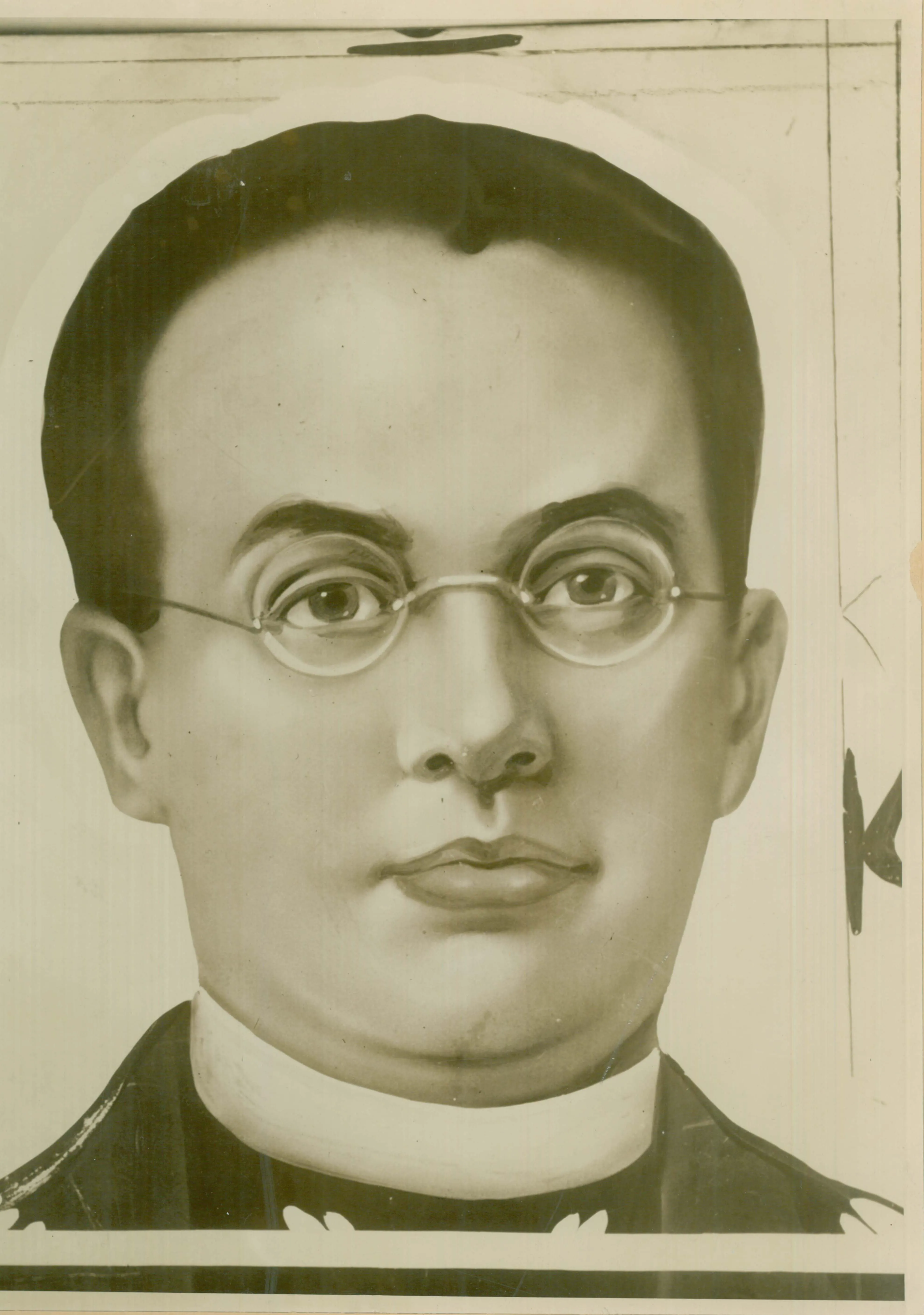
Cold Cases Case file
Under the Crabapple Tree: The Hall-Mills Murders, 1922
In September 1922 a married Episcopal priest and a married soprano from his choir were found shot dead and posed side by side under a crabapple tree near New Brunswick, their love letters scattered between them. A botched investigation split across two counties, and a sensational 1926 trial that acquitted the priest's widow and her two brothers, left the case one of the most famous unsolved murders in American history.
- Case type
- Cold case
- Status
- Unexplained
- Event date
- September 16, 1922
- Location
- Under a crabapple tree on the abandoned Phillips farm, off De Russey's Lane near New Brunswick, New Jersey (the victims lived in New Brunswick; the bodies lay just over the line in Somerset County) - United States
- Evidence
-
- Physical
- Official record
- Testimonial
The open question Who shot Rev. Edward Hall and Eleanor Mills under the crabapple tree and posed their bodies, given that the only people ever tried for it were acquitted and no one else was ever charged?
On the morning of 16 September 1922, a young couple walking off a lovers’ lane outside New Brunswick, New Jersey, came upon two bodies under a crabapple tree. A man and a woman lay side by side on their backs, deliberately arranged. The woman’s head rested on the man’s outstretched arm. His calling card was propped against his foot. Torn love letters were scattered around them on the ground. The man was the Reverend Edward Wheeler Hall, the married rector of a New Brunswick Episcopal church. The woman was Eleanor Mills, a married soprano from his choir. Both had been shot, and they had been arranged where they would be found.
It was a double murder, and it was never solved. What happened after the discovery did at least as much to make sure of that as anything that happened before it. The investigation split across two county lines, the scene was trampled and stripped for souvenirs, and key records later vanished. Four years on, after the case had gone cold and then been revived by a tabloid war, the priest’s widow and her two brothers stood trial for the killings, and a jury acquitted them. The murders have been officially open ever since. This is an account of what the record holds, what the evidence can and cannot establish, and where the theories begin. We keep three things separate, as always: what is documented, what the evidence shows, and what is still only a hypothesis.
The documented account
Edward Wheeler Hall was installed in 1909 as rector of the Church of St. John the Evangelist in New Brunswick. In 1911 he married Frances Stevens, a prominent parishioner from one of the town’s leading families, and moved into the Stevens mansion on Nichol Avenue. He was about forty-one in 1922. Eleanor Mills, about thirty-four, had sung in the church choir since girlhood and was married to the church sexton, James Mills.
Hall and Mills were involved in a relationship documented by their own correspondence and by diary entries Hall kept. By the account of the strongest source on the case, the historian Mary Hartman, it was effectively an open secret in the parish well before 1922. Those letters and diaries would later become evidence, and they are part of why the case is remembered. We treat them here as documented context, not as scandal: the affair supplies the motive narrative the prosecution would eventually build on, and little more can be said of it that the record supports.
Hall left the Nichol Avenue house on the evening of 14 September 1922 and did not return. Two days later, on the morning of 16 September, Raymond Schneider, twenty-two, and Pearl Bahmer, fifteen, came upon the two bodies under the crabapple tree off De Russey’s Lane, a known lovers’ lane on the abandoned Phillips farm in Franklin Township, just outside town. The arrangement was deliberate. Mills’s head lay on Hall’s outstretched arm, a scarf was draped over her neck, Hall’s glasses sat on his nose with his face partly covered by a Panama hat, and his printed calling card was propped against his foot. The torn letters lay strewn between them. Hartman calls it a tableau staged by the murderer or murderers. Stated once and clinically, as the record requires: Hall had been shot once in the head; Mills had been shot three times in the head and her throat had been cut.
The investigation went wrong almost at once. The victims lived in Middlesex County, but the bodies lay across the line in Somerset County, so two police forces and two county prosecutors entered the case together, and neither fully owned it. Before the ground could be secured, reporters and private citizens reached the site, trampled it, and stripped bark from the crabapple tree as souvenirs. Vendors later sold refreshments to the crowds who came to look. An early lead went nowhere: a local youth, Clifford Hayes, was arrested in October 1922 on the word of Raymond Schneider, who soon admitted he had lied, and Hayes was released. A Somerset County grand jury sat that November, heard dozens of witnesses over several days, and declined to indict anyone.
The case then lay dormant for nearly four years. It revived in 1925 and 1926 when the husband of a former Hall maid filed for annulment and claimed his wife had inside knowledge of the killings. The New York tabloid press, led by William Randolph Hearst’s New York Daily Mirror, drove the story hard, in what was by then a fierce circulation war among the New York tabloids that also drew in the Daily News. Under that pressure the governor appointed a special prosecutor, State Senator Alexander Simpson, and in 1926 Frances Hall, her brothers Henry and William (“Willie”) Stevens, and a cousin, Henry Carpender, were arrested.
The trial opened on 3 November 1926 in Somerville, the Somerset County seat. Frances Hall and the two Stevens brothers were tried jointly; Carpender’s case was severed for a separate trial that, in the end, never took place. The proceedings ran about a month and became a national spectacle. The prosecution’s star witness was discredited under cross-examination, and a fingerprint the State tied to Willie Stevens was contested by defense experts. On 3 December 1926, the jury returned a verdict of not guilty. The remaining counts were dismissed. No one has been convicted of the murders since, and the case remains officially unsolved on the Somerset County books.
The evidence
What the record establishes firmly is a double murder, a staged scene, and a trial that ended in acquittal. What it does not establish is who did the killing. The reason the gap was never closed is itself documented, and it runs through every item below.
The staged scene. The posing of the bodies is consistent across the strongest sources: Mills’s head on Hall’s arm, the scarf over her neck, the calling card at his foot, the letters strewn between them. Whoever did this wanted the affair on display alongside the dead. That is the central enigma of the case, and it is also the limit of the scene as evidence: a deliberate arrangement that broadcasts a motive identifies no one. It tells you something about why, and nothing reliable about who.
The botched investigation and the lost evidence. This is the most important fact in the file, and it is the reason the case may never be answerable. The Middlesex-Somerset county line meant rival forces, rival prosecutors, delay, and confusion at the very start, while the scene itself was trampled and looted before it could be worked. Worse came later. Hartman states flatly that by the time of the 1926 trial, masses of evidence had vanished, including autopsy reports and grand-jury testimony, and that the original Somerset prosecutor appears to have mislaid evidence; his brother was caught trying to sell grand-jury testimony anonymously to a newspaper. The evidentiary foundation of the case was degraded or gone before any court tried to weigh it. Everything that follows has to be read against that loss.
The love letters. Letters from Mills to Hall, and Hall’s diary entries, were recovered at the scene and read aloud at trial. They establish the relationship, and through it the motive narrative the prosecution used. Hartman quotes, from the case record, one line of Mills’s: “I have the greatest of all blessings, a noble man, deep, true, and eternal love.” We give that single line, attributed, to convey that this was a real attachment and not to dwell on it. The limit is the one that governs the whole case: a motive is not a perpetrator. The letters show why someone might have wanted the couple dead. They do not show who acted.
The calling-card fingerprint. The prosecution’s most concrete physical link was a fingerprint. The State alleged that a thumbprint on Hall’s calling card, found at the scene, belonged to Willie Stevens, and its expert so testified. The defense answered with its own fingerprint experts, who found no match to Willie Stevens’s prints, and it attacked the chain of custody: a detective testified he had initialed the card in 1922, yet the card produced in evidence bore no initials. The print was the strongest object the State had, and by the close of the case it had been effectively neutralized. The jury was given ample reason to doubt it, and it cannot be treated as proof of anything.
Jane Gibson, “the Pig Woman.” A local livestock farmer named Jane Gibson came forward in October 1922 with a claim to have been out at night watching for thieves, and to have witnessed the killings from nearby. At the 1926 trial she testified gravely ill, wheeled into the courtroom on a stretcher, in one of the spectacle’s defining images. Her credibility was a documented problem. Hartman writes that her account changed with each retelling, and the defense exposed her as vague and evasive about her own past on the stand. The jury plainly disbelieved her: Hartman quotes one juror saying he would sit there thirty years rather than convict anyone on the evidence the Pig Woman gave. In fairness to the record, Hartman also notes a counterweight, that some details of her account were backed up by other witnesses who saw her and the cars she described that evening. We paraphrase her account rather than quote it, because the quoted lines attributed to her rest on weak secondary sourcing. What matters for the case is the documented bottom line: her testimony could not bear weight as fact, and the jury treated it that way.
The trial record and the acquittal. The 1926 trial is the firmest official document the case has, and its meaning has to be stated carefully. The acquittal is a legal finding. In law it means the State failed to prove its charge against the three people it brought to trial. It does not establish who committed the murders, and it forecloses any assertion that the acquitted were guilty. That is the load-bearing point of this whole piece, and it sits at the center of the file, not at its margins.
The honest summary of the evidence is short and unwelcome. The scene announces a motive and names no one. The strongest physical link was contested and neutralized. The eyewitness was disbelieved. And the records that might have settled the matter were lost in the four-year gap. The investigation destroyed the case’s evidentiary basis before anyone could solve it.
The theories
Everything in this section is a hypothesis, and every person it touches is long dead. It needs saying plainly before any of it: Frances Stevens Hall and her brothers Henry and Willie Stevens were tried for these murders and acquitted on 3 December 1926, and their cousin Henry Carpender was never tried at all. Nothing below is a finding. It is the argument that has gone on around a record that never closed.
The family theory, which the jury rejected. The prosecution’s case, advanced by special prosecutor Alexander Simpson in 1926, held that Frances Hall, enraged by the affair, brought her brothers to confront the couple, and that the family killed them. A jury heard that case and acquitted all three defendants. It belongs here strictly as the rejected prosecution theory, and it cannot be presented as anything more. Some later writers have revived a version of it: the author Gerald Tomlinson, in Fatal Tryst, argued that the Stevens siblings were responsible. That is one writer’s argued reading, offered against the verdict, not a fact. Two stray items in the record are sometimes folded in, and both must be held at arm’s length. A 1970 statement by a man named Julius Bolyog claimed an unwitting role as a courier; Hartman frames it as tantalizing but unverifiable, and notes it was contradicted by the forensic finding that the victims were killed on the spot. A 1922 remark attributed to a minister friend of Hall’s, Paul Hamborszky, that Hall feared his wife might do him bodily harm, is likewise uncorroborated, and Hamborszky vanished before the 1926 trial. These are unverified record-items about acquitted and deceased people. Weighed against the acquittal, they prove nothing.
A Klan or vigilance “morality” killing. The attorney William Kunstler, in The Minister and the Choir Singer, proposed that the Ku Klux Klan, then strong in New Jersey and bent on punishing perceived sexual immorality, may have killed the couple. Kunstler himself conceded that the evidence was only circumstantial. Hartman’s critique is pointed: Kunstler cannot tie the Klan to the case in any direct way, and the vigilante precedents he cites fall short of murder. We present it as Kunstler’s theory, with its acknowledged weakness attached.
Robbery or some other hand. Robbery is weakly supported. Hall’s gold watch was reportedly missing, but coins remained in his pocket, which cuts against a simple street robbery. At trial the defense pointed instead toward James Mills, the widower, or even toward Jane Gibson herself as more plausible suspects. That was a courtroom tactic meant to seed doubt, not evidence, and it should be read as such. The standing lists of theories do include a jealous-husband reading, but nothing in the record establishes it.
The case may simply be unsolvable. The strongest documented throughline is not a culprit at all; it is structural. The trampled scene, the two-county fumble, the four-year delay, and the disappearance of the autopsy reports and grand-jury testimony left no clean evidentiary basis for any conclusion. This is the explanation the record best supports, and it has the singular virtue of accusing no one. The investigation may have made the murders permanently unanswerable.
What remains unknown
The killer was never identified. The people brought to trial were acquitted. The evidence that might have answered the question was lost before a court ever weighed it. More than a century later, the case stands almost exactly where it stood when the second grand jury declined to indict.
So we will not tell you that the family did it, because a jury heard that case and acquitted Frances Hall and her brothers, and the record does not support it. We will not tell you it was a Klan killing, because the one writer who argued it conceded his evidence was only circumstantial and could not be tied to the case. We will not tell you it was a robbery, because a robber who leaves the coins in a dead man’s pocket is no robber. And we will not tell you who arranged the two bodies under the crabapple tree, because the people who investigated it could not, and the records that might have answered it are gone.
What we can tell you is the documented shape of the thing. A priest and a choir singer who had loved each other were shot and laid out side by side on an abandoned farm, with their letters scattered around them, and they were found two days later by chance. Two of them. Edward Hall and Eleanor Mills were murdered, the case made a national circus and then a famous acquittal, and no one was ever held to account. The question it turns on is the one it opened with. Someone killed them and posed them to be found, and we do not know who.
Sources
Primary / primary-adjacent
The contemporaneous record of this case runs principally through the day-by-day coverage in The New York Times in 1922 and 1926, the Hall-Mills case materials held in Rutgers University’s Alexander Library Special Collections (original newspapers and photographs, police correspondence, the Hall-Mills letters and diary transcripts, and physical evidence used at trial), and the 1926 trial record itself. These primary materials are cited here in prose because they have no single clean public URL. The strongest published source drawing directly on the Rutgers collection and the trial record, and the one this account leans on most, is the scholarly article below.
Secondary / contextual
- Harold Schechter, “The Hall-Mills Murder Trial, 1926,” The Yale Review
- “Frances Hall, Henry Stevens, and William Stevens Trial: 1926,” Encyclopedia.com
- “Hall-Mills murder case,” Wikipedia
- “Hall-Mills murder case,” EBSCO Research Starters
- “The Murder of Edward Hall and Eleanor Mills: New Jersey’s Original ‘Crime of the Century’,” CrimeReads
- Joe Pompeo, Blood & Ink (2022), author page
- New Brunswick Free Public Library, Hall-Mills local-history collection