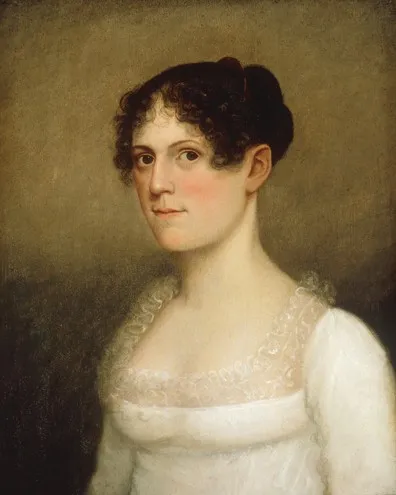
Disappearances Case file
Theodosia Burr Alston and the pilot boat Patriot: 213 years off Cape Hatteras
A former Vice President's daughter sailed from Georgetown, South Carolina, late in December 1812 aboard a privateer rigged to look unarmed; the British blockading fleet stopped her off Cape Hatteras on 2 January 1813 and let her pass; a storm came on that afternoon; she was never heard from again, and the case has stayed open for 213 years on a record that grows thinner the closer you look.
- Case type
- Disappearance
- Status
- Unexplained
- Event date
- January 2, 1813
- Location
- Atlantic coast of the United States; Georgetown SC to (intended) New York City; last reported off Cape Hatteras NC - western Atlantic / Cape Hatteras NC - United States
- Evidence
-
- Testimonial
- Official record
The open question What happened to the Patriot and her passengers between the morning of 2 January 1813 off Cape Hatteras and the days in early 1813 when the loss became certain in Charleston and New York.
Late in December 1812 a pilot boat called the Patriot sailed from Georgetown, South Carolina, bound for New York. She had been a successful privateer in the opening months of the war with Britain. For this passage her guns were dismounted and stowed below decks and her gun ports were painted over, so that she would present a peaceful face to the British squadrons blockading the United States coast. The passenger she had been engaged to carry was Theodosia Burr Alston, the only surviving child of Aaron Burr, third Vice President of the United States, and the wife of Joseph Alston, the sitting wartime governor of South Carolina. She was traveling north to visit her father, who had returned from European exile in May.
On 2 January 1813, off Cape Hatteras, the British blockading fleet stopped the Patriot, inspected her, and on the strength of a safe-passage letter from Governor Alston allowed her to continue. That afternoon a severe storm came on along the Carolina coast. It blew through the following day. After that, nothing. No further sighting was ever logged, no wreckage was ever positively identified, no signal was ever returned to her husband in Charleston or her father in New York.
By April 1813 both men had given her up for dead. The case has stayed open ever since. It is now in its 213th year, and the documentary record around the loss itself is so thin that almost everything that has come down about Theodosia Burr Alston’s death is something that the 19th and 20th centuries added to it. The canonical question is narrow: what happened to the Patriot and her passengers between the morning of 2 January 1813 off Cape Hatteras and the weeks in early 1813 when the loss became certain on shore.
The documented account
Theodosia Burr was born at Albany, New York, on 21 June 1783. Her mother, Theodosia Bartow Prevost, died in 1794. Her father’s role in the duel that killed Alexander Hamilton on 11 July 1804, and his trial and acquittal for treason at Richmond, Virginia, in 1807, lie outside this case and are documented elsewhere. On 2 February 1801 she married Joseph Alston of South Carolina (South Carolina Encyclopedia). Joseph Alston was elected Governor of South Carolina on 10 December 1812 by a narrow margin and held office through the war.
The Alstons’ only child, Aaron Burr Alston, born in 1802, died at the family’s Waccamaw rice plantations near Georgetown on 30 June 1812, at the age of ten. The cause was recorded as a summer fever consistent with malaria, which was endemic on the South Carolina low country (Theodosia Burr Alston to Aaron Burr, 12 August 1812, in the Gilder Lehrman edition of Davis’s 1838 Private Journal). Theodosia’s own health had been poor since the boy’s birth, and her surviving correspondence in the second half of 1812 reflects it. The decision to send her north by sea was made against that background. Her father, who had landed back in New York in May 1812 after years in Europe and was rebuilding a law practice, had been pressing for the visit.
The ship that took her was the pilot boat Patriot. She had returned to Georgetown from a privateering cruise during the opening months of the war with Britain, and for the New York run her guns were dismounted and stowed below decks and her gun ports were painted over, so that she would not look the part of a combatant (Wikipedia, citing Richard N. Cote, Theodosia Burr Alston: Portrait of a Prodigy, 2003, p. 265). The most-cited modern source for her master’s name is Cote, who gives “William Overstocks.” That name has passed into the encyclopedias from there; no independently located period source corroborates it. We carry it as attributed to Cote, not as established fact.
The traveling party comprised Theodosia, her maid, and Dr. Timothy Green, a physician and family friend (geriwalton, citing Cote). Joseph Alston, by then governor-elect or just inaugurated, prepared a letter requesting that the British blockading forces allow the Patriot to pass. No widely available source we have located names the addressee of that letter, and we leave it unnamed here for the same reason.
The Patriot sailed from Georgetown on 30 or 31 December 1812. The South Carolina Encyclopedia’s entry on Joseph Alston gives 30 December. The South Carolina Historical Society, the geriwalton biography, and most modern popular accounts give 31 December. The two dates may reflect a boarding on one day and the actual sailing on the next, but the discrepancy is unresolved in the sources, and there is no good ground to pick one over the other.
The last record of her under way comes from the logbooks of the British blockading fleet off Cape Hatteras. Wikipedia, citing Cote, and the South Carolina Historical Society both state that the Patriot was identified and briefly stopped by British naval forces off Cape Hatteras on or about 2 January 1813, and that on the strength of Joseph Alston’s letter she was allowed to proceed. Cote’s account attributes the encounter to the logbooks of the blockading fleet rather than to any specifically named warship or boarding officer, and we do not name either here. The popular online tradition that supplies a particular flagship and a particular admiral is not supported by what is in the cited record.
On the afternoon of 2 January 1813 a severe storm began off the Carolina coast and continued through 3 January. The South Carolina archaeologist James L. Michie reconstructed the storm track and placed the Patriot just north of Cape Hatteras when the storm was at its fiercest, sometime between Saturday evening and Sunday morning (Wikipedia, citing Michie via Cote 2002).
After that, the documentary trace of the Patriot runs out. The next surviving record of the case is on shore, in the silence the absent ship leaves in Joseph Alston’s and Aaron Burr’s letters. The South Carolina Historical Society reproduces a line from Joseph Alston to Aaron Burr: “Another mail and still no letter! I hear too rumors of a gale off Cape Hatteras at the beginning of the month. The state of my mind is dreadful.” Atlas Obscura reproduces a line attributed to Burr on the same subject: “No, no, she is indeed dead. Were she still alive, all the prisons in the world could not keep her from her father.” Neither line has yet been collated against the Mary-Jo Kline edition of Burr’s papers in the present research pass; they are carried here as attributed to those secondary sources, with that hedge.
By April 1813 both men had given her up. Joseph Alston died at Charleston on 10 September 1816, aged thirty-seven. Aaron Burr died at Port Richmond, Staten Island, on 14 September 1836.
The 19th-century retellings
What happened next is that the case did not stay quiet on shore, and from the 1830s onward the Patriot’s loss accumulated a layer of confession narratives that have stuck to it ever since. The earliest located is a report in the Mobile Register in 1833, in which a man from what the paper called the “interior counties” of Alabama claimed his crew had captured the Patriot and murdered all aboard (per the North Carolina Shipwrecks blog, citing the Mobile Register).
In 1872 the Louisiana historian and novelist Charles Etienne Arthur Gayarré published Fernando de Lemos, a novel in which the New Orleans privateer Dominique You confesses to taking the Patriot. That is fiction. It is named here because most modern scholarship treats it as the seed of several of the named-pirate confessions that followed in the press, and the timing of the next account makes the connection plain (Wikipedia, citing Cote 2002, pp. 293-294).
The most-cited confession is the one the Brooklyn Eagle carried in its issue of 3 January 1880, in which an elderly former pirate identified as “Old Frank” Burdick, in a poorhouse, said his crew, sailing with Dominique You, had captured the Patriot, that the passengers had been forced to walk the plank, and that one of them, a richly dressed lady in white, had stepped over the side calmly. That image, the only one of its kind in the surviving record, originates here. It is a press relay of a deathbed claim in a poorhouse, with no primary deposition behind it, and the detail that puts Burdick’s crew alongside Dominique You is exactly the detail Gayarré had supplied as fiction eight years earlier (Wikipedia, citing Cote 2002, p. 290, and Walker 2006, pp. 75-76). Walker also places a Burdick confession earlier, in 1848, which would predate the novel; the sources do not resolve whether that is a separate confession by the same name or the same retold story under a different date. We carry the 1880 Brooklyn Eagle relay as the strongest located source for the Burdick account.
A later layer was added in the 20th century by the journalist Foster Haley, who attributed the Patriot’s loss to John Howard Payne in the Charleston News and Courier (per Wikipedia, citing Cote). Cote’s note is that Haley “never identified or cited the documents.” It is recorded here for completeness.
The names that the press attached to the case in this long second life, Burdick, Dominique You, Payne, the unnamed Alabama defendant of 1833, share three features. None of them was ever charged or convicted in connection with the Patriot. None of the confessions appears in the surviving record as a signed primary deposition. Each enters the record only through a 19th- or early-20th-century newspaper retelling a story said to have been told to someone else. They are reported here because they are part of the documentary trail; they are not part of the documented account of what happened to the Patriot.
The evidence
Strip the legend off and the evidentiary record around the loss itself is short, and most of it is documented absence rather than documented presence.
The British naval logbooks. The strongest 1813 record bearing on the Patriot is the logbook entries of the British blockading fleet off the Carolinas in late December 1812 and early January 1813, which record the storm and, according to Cote 2002 via Wikipedia, the brief encounter with the Patriot on or about 2 January 1813. The full provenance, to which boat boarded her, by whose order, and what the boarding officer recorded of the encounter, has not been pinned in the sources surveyed for this article. The British Admiralty papers at the National Archives at Kew (ADM 1 series for the North America Station, January 1813) are where the surviving copy of Joseph Alston’s safe-passage letter, if one survives, would be sought.
The Joseph Alston and Aaron Burr correspondence. The shore-side record of the loss is the surviving family correspondence of January through April 1813, with Joseph Alston’s letters to Burr and Burr’s replies. The originals are in the Aaron Burr Papers at the Library of Congress and are edited in Mary-Jo Kline’s 1983 Princeton edition; specific January-April 1813 letters have not been collated against Kline for this article and would benefit from that collation at the reviewer’s stage. The two attributed lines reproduced above, from the South Carolina Historical Society and from Atlas Obscura, are the most-quoted pieces of that correspondence in the secondary record.
The 1813 contemporaneous press. The Charleston Courier, Charleston City Gazette and Daily Advertiser, and New York Evening Post of January through April 1813 are referenced in general terms by the South Carolina Historical Society and by geriwalton, but specific issues for the loss itself were not located in the present research pass. The 19th-century retellings cited above, including the Brooklyn Eagle of 1880, are not 1813 contemporaneous reportage; they belong to the case’s second life, not to the loss itself. The thinness of the 1813 contemporaneous coverage is itself part of the evidentiary record.
The Nag’s Head Portrait. The single material artifact in the case is an oil portrait of a young woman, currently held by the Lewis Walpole Library at Yale University, catalog record LWL Ptg. 155. Its chain of custody back to 1813 is incomplete; its chain of custody from 1869 forward is now well-documented and is recorded by the Yale catalog.
In the summer of 1869, Dr. William Gaskins Pool of Elizabeth City, North Carolina, was called to treat an elderly woman at Nag’s Head identified in the contemporary press and in the Pool family papers as Polly Mann. She paid him in part with an oil portrait of a young woman that hung in her cabin. According to the account Dr. Pool’s daughter and the family later recorded, she said the portrait had been recovered by her late husband, named in the Daily Advocate of 8 September 1899 (via geriwalton) as Joseph Tillett, from an abandoned pilot boat that drifted ashore on the Outer Banks “during the English war,” with all sails set and her name painted over. The cabin had been looted, and the portrait was one of the items carried off. Bettie Freshwater Pool, a relative of Dr. Pool, published a longer account in The Eyrie and Other Southern Stories (1905); the North Carolina Booklet, vol. 9, no. 2 (October 1909) carried a contemporary account; earlier Carolina Watchman (28 January 1875) and Farmer and Mechanic (Raleigh, 13 June 1878) reports preceded both (ECU Joyner Library Special Collections).
The Yale catalog records the work as oil on panel, visible image 17 by 13.75 inches, framed 21 by 18 inches, dated “[ca. 1812?].” The catalog’s chain of custody is: Dr. W.G. Pool, Elizabeth City NC (1869); Mrs. J.P. Overman, Elizabeth City (ca. 1907); purchased via the Macbeth Gallery, New York, by Herbert Lee Pratt of Glen Cove, Long Island; his daughter Mrs. Pratt McLane (later Mrs. Howard W. Maxwell Jr.), New York; and transferred from the Annie Burr Jennings estate in 1939 to Annie Burr (Auchincloss) and Wilmarth Sheldon Lewis of Farmington, Connecticut, the founders of the Lewis Walpole Library. The Yale catalog also addresses attribution directly. The work is recorded as “Formerly wrongly attributed to John Vanderlyn.” It is not, on the cataloger’s own statement, attributed to a named artist, and it is not on the cataloger’s own statement confirmed as a portrait of Theodosia Burr Alston. Mary Alston Pringle, identified in the geriwalton account as a sister-in-law of Theodosia, was shown the portrait and could not identify the sitter (geriwalton, citing the Daily Advocate, 1899). No documented chain of custody connects the Alston household to Nag’s Head between January 1813 and 1869.
Absences. No wreckage has ever been positively identified as belonging to the Patriot. The Outer Banks coast holds hundreds of unidentified wrecks of the period, catalogued by the North Carolina Office of Archives and History and by the North Carolina Maritime Museum, but none of them has been tied to her. No British Admiralty record of a Patriot capture has been located in the modern literature surveyed; the encounter of 2 January 1813 is recorded in Cote’s account as a stop and a release, not a capture. No signed primary deposition exists behind any of the 19th-century confessions. No modern wreck search specifically targeting the Patriot by a reputable expedition is documented in the sources surveyed. These are documented absences, and they are part of why the case is still open.
Hypotheses and open questions
Each of the following is layer-3 speculation. None is asserted as fact.
1. Foundered in the storm of 2-3 January 1813. This is the simplest reading of the documentary record. The storm is in the British naval logbooks per Cote and is reconstructed in the meteorological work cited via James L. Michie. The Patriot was reported in the storm’s path off Cape Hatteras on the afternoon of 2 January, sailing with her guns stowed and her hatches probably more easily breached than a vessel rigged for weather. The principal constraint is the same one that constrains every other reading: no wreckage has ever been positively identified, and the absence of bodies, debris, or specific Patriot artifacts among the catalogued wrecks of the coast is not by itself dispositive.
2. Pirate capture. Multiple 19th-century confession narratives place the Patriot’s loss at the hands of pirates: the 1833 Mobile Register report; the 1872 Gayarré novel (fiction, but a clear seed); the 1880 Brooklyn Eagle relay of “Old Frank” Burdick’s deathbed confession in a poorhouse; the later Foster Haley claim of John Howard Payne, undocumented in Cote’s account. The constraints are heavy. Every named confession is a press relay of a deathbed claim; none has a signed primary deposition; the Burdick relay’s “shipmate of Dominique You” detail tracks Gayarré’s 1872 novel and is best read as a confession shaped by the novel. Piracy in the early-1813 western Atlantic was real but less prevalent than it had been in the 18th century, and the Patriot had been a successful privateer with a recent combat record, which makes her an awkward soft target.
3. Wrecked on the Outer Banks and plundered. This is the hypothesis the Nag’s Head Portrait points toward. The argument is the Pool-Mann account of 1869: a wrecked, abandoned pilot boat drifted ashore in early 1813 with her name painted over; her cabin was looted; the portrait, surviving by the chance of being given as a doctor’s fee, made its way over the next seventy years to Yale. The constraints are also heavy. The portrait’s identification as Theodosia is not confirmed and the Yale catalog explicitly hedges both sitter and attribution. No period documentary chain connects the Alston household to Nag’s Head. The Polly Mann account is hearsay at one or two removes. Mary Alston Pringle could not identify the sitter as Theodosia.
4. British capture or sinking. The Patriot was a former privateer in wartime. If captured by British forces, the disposition would normally be logged in Admiralty records. No such record has been identified in the modern literature surveyed. The Wikipedia account, citing Cote, presents the encounter of 2 January 1813 as a stop, an inspection, and a release, not a capture. This hypothesis remains formally open but is supported by no positive evidence.
5. A separate maritime cause. Fire, a hull failure, a navigational error in storm conditions. Speculative; no positive evidence; recorded for completeness.
What remains unknown
After 213 years the residue of the case is narrow, and it has the same shape from every angle.
A pilot boat sailed from Georgetown, South Carolina, on 30 or 31 December 1812, carrying Theodosia Burr Alston and her party. The British blockading fleet stopped her off Cape Hatteras on the morning of 2 January 1813 and let her go. A storm came on that afternoon and ran through the next day. After that there is no further sighting. No wreckage has ever been positively identified as belonging to the Patriot. No British Admiralty record of a Patriot capture has been located in the modern literature. No signed primary deposition exists behind any of the 19th-century confessions, all of which entered the record through later press retellings of stories said to have been told to someone else. One contested portrait sits in a Yale library, of disputed sitter and disputed attribution, with a chain of custody that begins in a Nag’s Head cabin in 1869 and does not connect back to the Alston household in 1813. The most-quoted lines in the case are two from her husband and her father, written before the loss was certain on shore, and a fragment of a deathbed confession in a Brooklyn poorhouse seventy years later that tracks a novel published eight years before it.
What is reportable is the disappearance: a documented departure, a documented British encounter on 2 January 1813 with no named warship and no named officer, a documented storm, and a documented silence. What is not assertable is any of the four lines the 19th and 20th centuries supplied for that silence. The Burdick relay, the Payne attribution, the Mobile Register defendant, the Pool-Mann portrait. Each names long-dead people, none of whom was ever charged or convicted in connection with the Patriot; each enters the record as press, not as evidence.
The case stays open on what is there. Theodosia Burr Alston sailed from Georgetown and did not arrive at New York. The Patriot was last seen off Cape Hatteras on the morning of 2 January 1813. The rest is what the centuries since have written on the empty place she left.
Sources
Primary and primary-near
- Gilder Lehrman Institute, “Theodosia Burr Alston mourns the death of her son, 1812” (letter of 12 August 1812)
- North Carolina State Archives, Pool Family Papers (PC.5328) finding aid
- Yale University, Lewis Walpole Library, catalog record for the portrait associated with Theodosia Burr Alston (LWL Ptg. 155)
The Aaron Burr Papers at the Library of Congress (Manuscript Division), edited in Mary-Jo Kline, Political Correspondence and Public Papers of Aaron Burr, 2 vols. (Princeton University Press, 1983), are the primary documentary basis for the Joseph Alston and Aaron Burr correspondence of January through April 1813 referenced above. The British Admiralty papers at the National Archives at Kew (ADM 1 series, North America Station, January 1813) are the primary documentary basis for the British naval logbook record of the storm and the encounter, accessed in this article via Cote 2002. The Mobile Register of 1833; the Brooklyn Eagle of 3 January 1880; the Carolina Watchman of 28 January 1875; the Farmer and Mechanic (Raleigh) of 13 June 1878; and the Daily Advocate of 8 September 1899 are the period press sources referenced in the article, accessed via the secondary sources listed below; the Brooklyn Eagle issue is the source of the Burdick relay and is the strongest located source for that confession. None was consulted in original form for this article and each is named for the reader who wants the original issue.
Secondary and contextual
- Wikipedia, “Theodosia Burr Alston”
- South Carolina Historical Society, “December, 1812: Theodosia Burr Alston is Lost at Sea”
- Library of Congress, Headlines and Heroes, “The Unsolved Mystery of Aaron Burr’s Daughter” (January 2019)
- Atlas Obscura, “The Dramatic Life and Mysterious Death of Theodosia Burr”
- ECU Joyner Library Special Collections, “Unsolved North Carolina Mysteries: The Case of Theodosia Burr Alston” (30 January 2024)
- Geri Walton, “Patriot’s Disappearance and Theodosia Burr Alston”
- North Carolina Shipwrecks blog, “Schooner Patriot and the Mystery of Theodosia Burr Alston” (April 2012)
- North Carolina Ghosts, “The Portrait of Theodosia Burr”
- South Carolina Encyclopedia, “Alston, Joseph”
Richard N. Cote, Theodosia Burr Alston: Portrait of a Prodigy (Mount Pleasant SC: Corinthian Books, 2003) is the standard modern dedicated treatment and is the source behind a large fraction of the secondary record cited above. Nancy Isenberg, Fallen Founder: The Life of Aaron Burr (New York: Viking, 2007) is the standard modern Burr biography. Neither was consulted in original form for this article and both are named for the reader who wants the underlying scholarship.